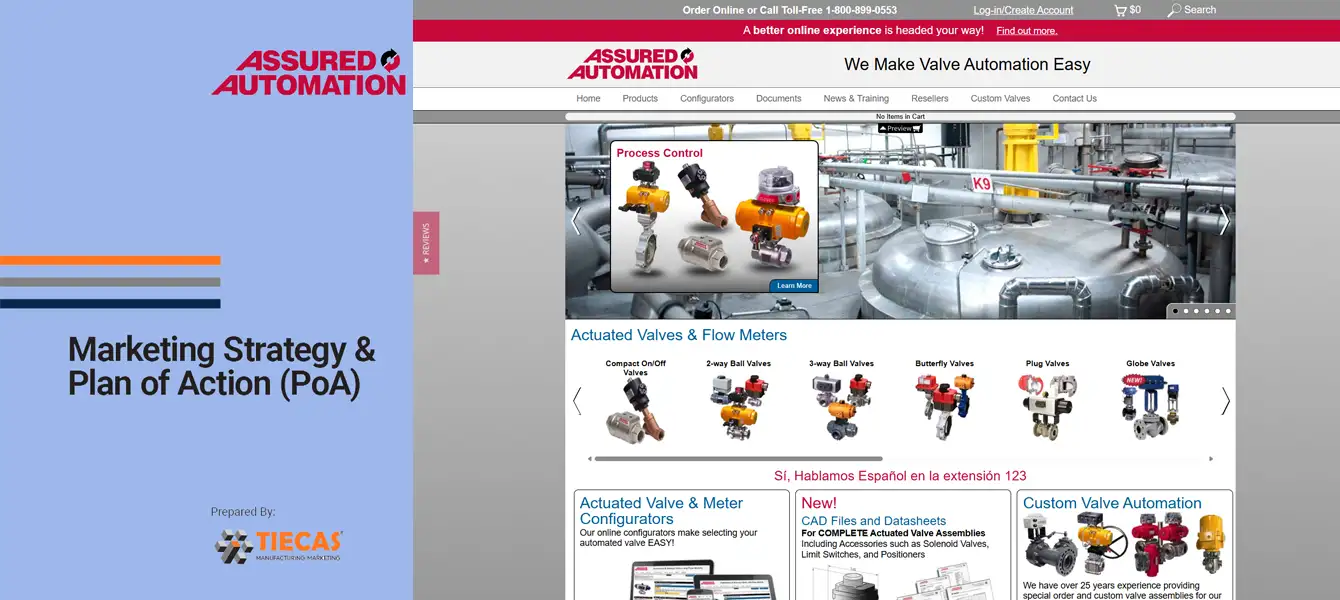
Many manufacturers stay busy with marketing activities but lack a documented strategy to guide priorities, messaging, and execution.
This case study shows how Assured Automation partnered with Tiecas to develop a clear manufacturing marketing strategy—creating focus, alignment, and a foundation for scalable growth.
Client
Assured Automation
A provider of valve automation solutions serving industrial and OEM markets.
The Challenge
Assured Automation had strong brand recognition, solid organic visibility, and deep technical expertise. However, marketing efforts had become tactically driven rather than strategically led.
Key challenges included:
- No documented manufacturing marketing strategy
- Product-focused messaging instead of customer value
- Limited differentiation despite good visibility
- Inconsistent, resource-constrained content creation
- Missed early-stage demand generation opportunities
Leadership recognized that growth would stall without a clear strategy.
The Strategic Engagement
This was a strategy-first engagement, focused on defining what to do and why before execution.
Tiecas developed a comprehensive manufacturing marketing strategy based on:
- Stakeholder input and diagnostic reviews
- Independent third-party research validating content and differentiation gaps
The strategy centered on six pillars:
- Customer-centricity by target industry
- Value-driven messaging
- Clear differentiation
- Ease of doing business
- Technical authority
- Thought leadership in valve automation
A phased Plan of Action translated strategy into execution-ready guidance across content, SEO, website messaging, social/video, measurement, and sales enablement.
Result Delivered
Although this phase focused on strategy—not execution metrics—the impact was immediate.
One of the first strategy-led technical blogs triggered third-party editorial interest:
“The editor of Valve World Americas reached out with a strong interest in sharing our article
From Manual to Smart: How Automated Valves Streamline CIP & SIP in Food & Beverage Plants
in their newsletter and on their website.”
Internally, leadership gained clarity, marketing shifted to a documented roadmap, and sales and marketing alignment improved.
This case study shows how strategy creates focus—and why execution works better after the strategy is defined.