AI for creating industrial websites is now part of the conversation almost everywhere I look. Manufacturers are using AI in production, planning, HR, marketing, customer support, and data analysis. So I am not going to pretend website development is somehow off-limits.
It is not.
There is a lot of chatter about ChatGPT, Claude, Google Stitch, vibe coding, and AI site builders that can supposedly turn a few prompts into a finished website. Some of that chatter is justified. AI can absolutely help speed up certain parts of website planning, writing, coding, and production.
But speed is not the same as effectiveness. A polished-looking website is not automatically a good industrial website design.
That difference matters more in industrial markets than in many others. According to the new 2026 State of Marketing to Engineers research from TREW Marketing and GlobalSpec, technical buyers spend 62% of the buying journey researching online before they ever contact a vendor.
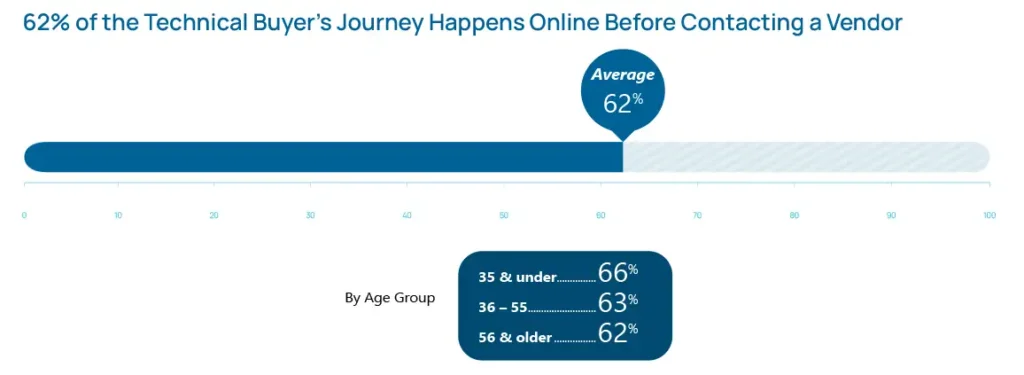
You may be thinking, “We market to senior-level decision-makers.” Think again. Younger engineers are often tasked with gathering information in the early stages. They are strong influencers in the final decision. Ignore them at your own peril!
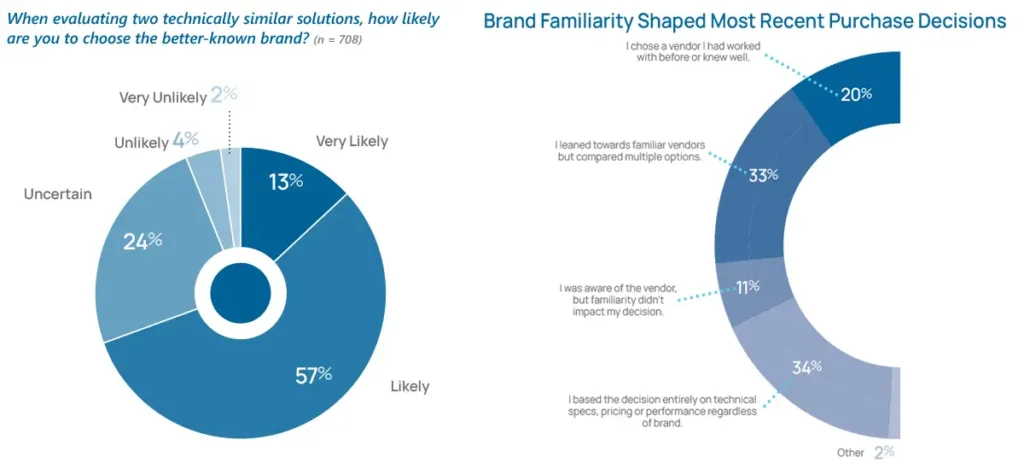
The same report also says 70% of engineers and technical buyers choose the better-known brand when considering nearly identical suppliers. That tells me two things. Your website matters early. And the way your company presents expertise and credibility matters a lot.
AI for Creating Industrial Websites is Fast, but Fast is Not the Same as Effective
I will give AI its due. It can help with a lot. It can:
- Generate rough copy drafts
- Suggest page structures
- Write starter code
- Help organize content
- Speed up repetitive production tasks
- Help experienced developers work faster
That is real value.
However, Paul Charlton of WPTuts, in his recent AI-focused tutorials, shows that it is not a magic button that replaces strategy, architecture, technical setup, or judgment. It still sits inside a larger build process managed by someone who knows what they are doing.
That is where many manufacturers can get misled. They see a demo. They see a fast result. They assume the website problem is solved. Usually, it is not.
Where AI for Creating Industrial Websites Comes Up Short in Industrial Markets
Industrial websites are not built for casual shoppers. They are built for engineers, technical evaluators, operations teams, purchasing, executives, and sometimes channel partners. Not all those people need the same information. They do not all enter the buying process at the same stage. And they are rarely making quick, emotional purchases.
That is why AI-generated websites often come up short.
The output may look clean. The words may sound plausible. But too often the result is generic. It sounds like every other supplier. It lacks technical depth. It misses what skeptical industrial buyers need to trust the source.
While 94% of B2B buyers use AI tools (like ChatGPT or Perplexity) to research, only 4% have high confidence in AI-driven outputs. (Source).
You just can’t ignore those numbers. Those are not small signals. This is where a professionally planned industrial website design starts to separate itself from a quick AI build.
Industrial Website Design Must Be Built Around Buyer Intent, Trust, and Technical Accuracy
In my experience, a strong industrial website is built around a strategy. Not a template. Not a prompt. Not a pile of pages generated in an afternoon. It should be built to do several things well:
- Attract the right visitors
- Communicate clearly to multiple stakeholders
- Support long and complex sales cycles
- Present technically accurate information
- Build trust through proof, clarity, and relevance
- Guide the visitor toward a meaningful next step
That last point matters.
Many industrial websites still function like online brochures. They talk about the company. They list products or capabilities. They may look modern enough. That’s all well and good, but they do not help the buyer move forward.
A serious industrial website design must align with the sales process. It should anticipate questions. It should reduce friction. It should help engineering and non-engineering stakeholders find what they need. And it should make it easier for the right prospect to start a meaningful conversation.
AI does not and cannot discover all that on its own.
For more on industrial website design, read Industrial Website Design: Real-World Answers to 9 Common Questions from Manufacturers.
Why Manufacturing Website Strategy Matters More Than the Tool You Use
This is the part many people want to skip. It is also the part that makes the biggest difference.
Before I develop a website, I want to do discovery and planning. I want to understand the business, the audience, the buying journey, the sales process, the competitive context, the product mix, and the real points of differentiation.
That work may include:
- Interviews and discovery
- Audience and buyer analysis
- Competitor review
- Content planning
- Keyword and search intent research
- Site architecture
- Proof-point planning
- Conversion path strategy
- Calls to action that fit the real sales cycle
That is not wasted time. That is the work that prevents a website from becoming another “me too” brochure.
Without that thinking, the design may still look nice. But the site will not pull its weight.
AI Website Builder for Manufacturers: The Prompt Problem Nobody Talks About Enough
This is where I want to be very direct. AI needs precise inputs to produce meaningful outputs. Garbage in, garbage out (GIGO) still applies.
If someone wants AI to generate a serious industrial website, the prompts must be highly specific. They must reflect the target audience, the product or service, the competitive landscape, the technical requirements, the buyer journey, the brand voice, the desired conversion path, and the content structure.
Creating such in-depth prompts takes a lot of real experience.
And here is the uncomfortable truth. If you, the reader, already have the expertise to write those kinds of detailed prompts, evaluate the output critically, fix the weak parts, and shape the final product into a strategic sales tool, then you’d be in my business.
Writing those prompts takes time. Reviewing the output takes time. Correcting generic messaging takes time. Checking technical accuracy takes time. Reworking the structure takes time. So, where is the time savings?
In many cases, there are some savings in production. But there is no shortcut around thinking. There is no shortcut around strategy. There is no shortcut around judgment.
That is an important distinction.
Why the Cost Difference Is So Big
A low-cost AI-led website and a professionally developed industrial website are priced differently, not just because one designer charges more than another. A low-cost AI site usually gives you:
- Faster output
- Lower upfront spend
- Less discovery
- More generic messaging
- Weaker differentiation
- Greater risk of rework later
A professionally planned industrial website design engagement gives you:
- Strategic discovery
- Clearer positioning
- Better content planning
- Stronger technical credibility
- Better alignment with the sales process
- A more useful asset for long-term growth
That is why the price gap exists.
One approach is mainly about producing pages. The other is about building a website that helps the right prospects trust you, understand you, and contact you.
AI for Creating Industrial Websites Works Best as a Tool, Not as the Strategist
I am not anti-AI.
Used properly, AI can support research, ideation, coding, drafting, and production efficiency. I use it myself where it makes sense. But I use it as a tool within a larger strategic process. That is the right role for it.
In industrial markets, the website still has to earn trust. It still has to communicate accurately. It still has to support a long buying process. And it still has to represent your business to buyers who do a lot of homework before they ever talk to sales.
If you want a quick site, AI can help you get one.
If you want a website that functions as a serious sales-enabling asset, strategy has to come first.
Start a conversation with me before you start your next industrial website design project.
I will help you think through the strategy, planning, and structure first, so you do not end up spending less upfront only to pay for it later in missed opportunities, weak messaging, and costly rework. Let’s have a conversation.

Leave a Comment