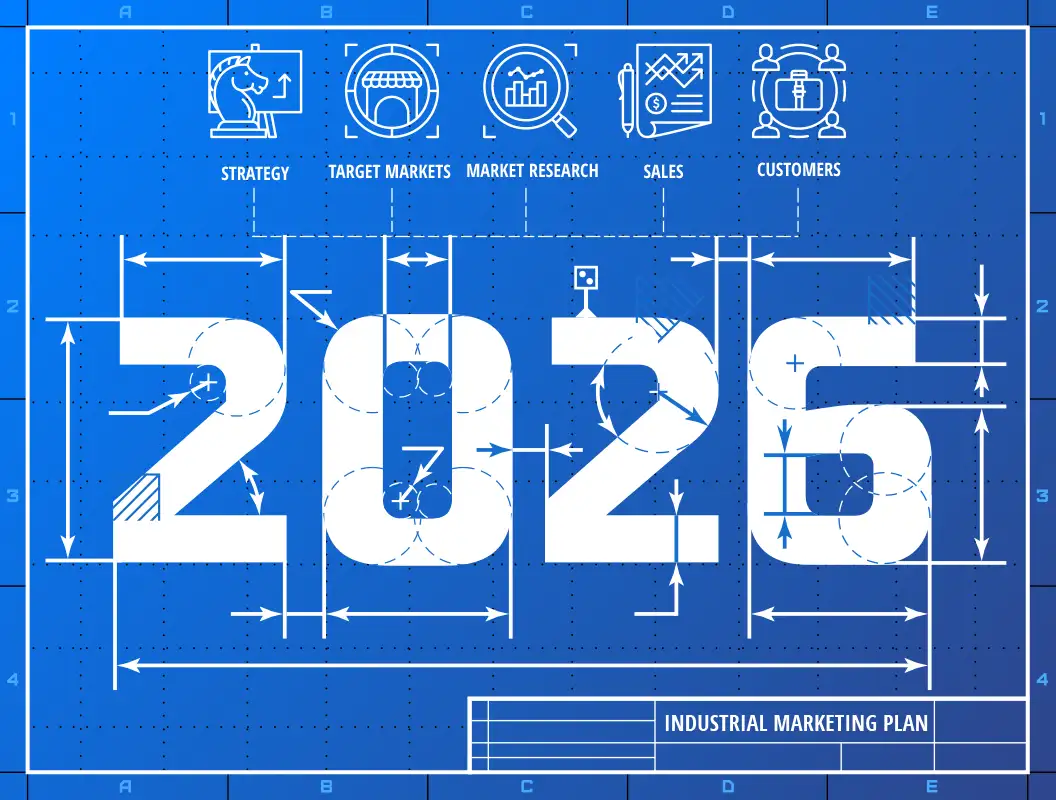
Category: industrial marketing strategy

  • Your 2026 Industrial Marketing Plan Starts Now—How to Finish 2025 Strong and Set Up for Growth

    Your 2026 Industrial Marketing Plan Starts Now—How to Finish 2025 Strong and Set Up for Growth

    Are you working on your 2026 industrial marketing plan?

    As 2025 winds down, many manufacturers are still focused on closing the year strong—wrapping up campaigns, meeting sales goals, and managing budgets. But this is also the ideal time to shift your attention forward. The most successful industrial companies don’t wait for January to plan; they start in Q4, using lessons from this year to fine-tune their approach for the next.

    A solid industrial marketing plan for 2026 isn’t just a checklist of tactics. It’s a roadmap built on data, aligned with sales, and grounded in what truly drives results—high-quality leads and measurable growth.

    That’s especially critical now, when engineers and technical buyers spend about 60% of the buying process online before ever contacting a vendor, according to the 2025 State of Marketing to Engineers Report by TREW Marketing and GlobalSpec.

    For manufacturers, this means your digital presence—your content, website, and credibility—often speaks long before your sales team does. That’s why now is the time to review your strategy, assess what worked (and what didn’t) in 2025, and lay the foundation for stronger alignment between marketing and sales next year.

    Finalize and Measure Your 2025 Efforts Before Planning Ahead

    Before you start sketching out next year’s goals, take a step back to measure what’s already been done. Many manufacturing marketers skip this critical step, focusing on next year’s tactics without analyzing this year’s data.

    Yet, according to the Content Marketing Institute’s 2025 Manufacturing Marketing Outlook, only 45% of manufacturing marketers say they measure content performance effectively, and 64% struggle to attribute ROI to their efforts.

    That lack of measurement makes it hard to identify which campaigns, platforms, and content types actually deliver results. So, start your 2026 planning with a marketing audit.

    If you find yourself without good data, that’s a signal to improve your tracking and reporting infrastructure in 2026—something our Industrial Marketing Strategy and Fractional CMO services can help with.

    By closing out 2025 with a performance-based mindset, you’re not just wrapping up the year—you’re setting measurable baselines that will make your 2026 industrial marketing plan far more strategic.

    Surface and Solve Last-Minute Marketing Friction

    Even the most experienced manufacturing marketers run into friction points late in the year—things that hold campaigns back or prevent marketing and sales from working in sync. Ignoring them now only carries those problems into 2026. This is your opportunity to diagnose and fix what’s slowing down performance.

    That disconnect between sales and marketing is one of the most significant sources of marketing friction I see when working with manufacturers.

    Engineers don’t want marketing fluff—they want practical, technically relevant information they can trust. When that content isn’t aligned with their buying process, it fails to move leads from awareness to consideration.

    Here’s a short checklist I often use with clients during Q4 to identify and remove friction:

    • Audit content alignment: Map your top-performing content to each stage of the buyer’s journey. Where are the drop-offs?
    • Review handoffs: Look at how Marketing Qualified Leads (MQLs) are passed to Sales. Are definitions consistent? Are leads nurtured properly before being handed off?
    • Check your digital sales assets: Ensure your sales team has updated product sheets, case studies, and application stories to help them close end-of-year deals.
    • Refine your messaging: Eliminate jargon (Don’t dumb it down either) or outdated positioning that no longer resonates with technical audiences.

    Sometimes these fixes are simple process updates. In other cases, you might need structural improvements—like tightening your analytics, automating lead scoring, or overhauling an outdated website.

    That’s where a Fractional CMO engagement or a strategic website redesign can help establish a stronger foundation going into the new year.

    The goal is to clear the roadblocks now so you’re not wasting valuable Q1 momentum solving previous year’s problems.

    Laying the Foundation: Your 2026 Industrial Marketing Strategy

    A successful 2026 industrial marketing strategy begins long before January. The groundwork you lay now determines whether next year’s industrial marketing plan delivers measurable results or just more busy work.

    According to Gartner’s Marketing Predictions 2025, nearly 70% of CMOs say they’re under increasing pressure to demonstrate ROI from marketing investments.

    Yet, fewer than half believe they have the right data to do it. In manufacturing, this challenge is even greater because long sales cycles make it difficult to connect marketing activities directly to revenue.

    That’s why your 2026 strategy should be built on three pillars: clarity, data, and alignment.

    1. Define Clear, Measurable Goals

    Generic goals like “increase website traffic” or “grow leads” won’t cut it anymore. Set specific objectives tied to revenue or pipeline metrics—for example, “increase Marketing Qualified Leads from target accounts by 15%.” Your Industrial Marketing Strategy should define these KPIs upfront, along with how they’ll be tracked and reported throughout the year.

    2. Make Data Your Competitive Advantage

    The latest NetLine 2025 State of B2B Content Report found that 65% of B2B marketers plan to rely more heavily on first-party data for campaign personalization in 2026. Yet many industrial marketers still operate with siloed systems or incomplete analytics. Integrating your CRM, marketing automation, and website analytics will give you the visibility to measure what’s actually working—something that separates strategic marketing from tactical execution.

    3. Align Marketing and Sales Around the Buyer’s Journey

    That means your digital presence must educate, build trust, and position your company as an expert long before a salesperson enters the picture.

    This requires tight collaboration between marketing and sales—ensuring that messaging, lead scoring, and follow-up are seamless. (Refer to Bridging the Gap Between Industrial Marketing and Sales for Better Lead Conversions.)

    When these three elements come together, your industrial marketing plan becomes more than a collection of tactics—it becomes a roadmap for revenue growth.

    If your in-house team needs help building that roadmap, that’s where a structured engagement like our Industrial Marketing Strategy service comes in. It gives you a clear action plan, complete with priorities, timelines, and performance metrics to execute confidently in 2026.

    Fractional CMO: Strategic Oversight Without the Full-Time Cost

    Once your strategy is defined, success in 2026 depends on disciplined execution. That’s where having the right leadership, infrastructure, and systems in place makes the difference between another year of “good intentions” and one that produces measurable growth.

    For many small to mid-sized manufacturers, hiring a full-time CMO isn’t realistic. But without experienced oversight, marketing efforts often drift—projects start strong and fade due to a lack of direction or accountability.

    A Fractional CMO engagement bridges that gap. You gain senior-level strategic guidance, oversight of ongoing campaigns, and the discipline to ensure marketing stays aligned with business goals.

    It also helps maintain momentum between sales, content, and digital initiatives, ensuring everyone is working toward measurable outcomes rather than just activity.

    Think of it as adding executive horsepower without the full-time overhead.

    Industrial Website Design: Your Most Valuable Sales Asset

    Your website is often the first—and most influential—touchpoint in the industrial buying process. Engineers and technical buyers spend about 60% of their research phase online, and 73% rely on vendor websites and technical publications for information. (Source).

    A poorly structured site or outdated design doesn’t just hurt credibility—it slows down sales. A high-performing industrial website does much more than look good.

    If your current site isn’t built with this purpose, 2026 is the year to redesign it around your buyer’s journey. (See: Industrial Website Design).

    Marketing Systems and Data Integration

    Even the best strategy will stall if your tools don’t talk to each other. Yet, as the CMI Manufacturing Marketing Outlook found, 58% of manufacturers lack the ability to automate repetitive workflows or consolidate marketing data.

    By integrating your CRM, marketing automation, and analytics platforms, you can:

    • Improve lead scoring and qualification accuracy.
    • Enable closed-loop reporting between marketing and sales.
    • Identify high-value accounts for ABM-style targeting.
    • Simplify performance dashboards for executive visibility.

    With these systems in place—and guided by a Fractional CMO—you’ll have both the leadership and infrastructure to execute your 2026 industrial marketing plan efficiently and confidently.

    Generative AI in Your 2026 Toolkit (Dose of Realism)

    There’s no denying that generative AI will continue to reshape how we create, distribute, and optimize content in 2026. But as manufacturers rush to integrate AI into their marketing workflows, it’s worth remembering that AI is a tool — not a replacement for expertise or strategy.

    Engineers want to know that the information they read is factually accurate, not machine-generated. They value credibility, transparency, and subject-matter expertise over speed or volume.

    Still, AI has practical uses in your marketing plan — when applied with purpose:

    • Content ideation and optimization: Use AI to generate topic ideas, reformat existing content, or test alternative headlines based on engagement data.
    • Audience insights: Analyze CRM and campaign data to uncover behavioral patterns and inform lead scoring or account segmentation.
    • Efficiency and repurposing: Automate repetitive production tasks, such as converting webinars into blog summaries or creating variations of email copy.

    According to Gartner’s Marketing Predictions 2025, 93% of marketing leaders report positive ROI from responsible AI adoption, particularly in areas like content optimization and personalization. But Gartner also warns that without proper oversight, AI can produce “formulaic” content that undermines credibility and brand voice.

    In other words, generative AI can support your strategy — but it can’t think strategically for you.

    See What Are the New Rules of Manufacturing Marketing in an AI-Driven World? .

    End 2025 Strong — Start 2026 Smarter

    Q4 isn’t just the end of the year; it’s the bridge between lessons learned and opportunities ahead. The manufacturers that outperform their competitors in 2026 will be the ones who use this time to plan intentionally, not reactively.

    A documented, data-driven marketing strategy—supported by the right website infrastructure and guided by expert oversight—can help your company move from tactical execution to measurable growth.

    Whether you need to build a strategic roadmap, strengthen sales and marketing alignment, or modernize your digital presence, this is the moment to prepare—not in January, when the year is already underway.

    Partner with Tiecas for Your 2026 Industrial Marketing Success

    If you’re ready to plan smarter, not just work harder, I can help you develop a customized industrial marketing roadmap that connects strategy, execution, and results.

    At Tiecas, we bring over 35+ years of experience helping manufacturers and industrial companies turn complex technical products into meaningful conversations that drive qualified leads and measurable ROI. Let’s make 2026 your strongest year yet. Start a conversation today.
  • Industrial Marketing Strategy vs. Tactics: What Manufacturers Often Get Wrong

    Industrial Marketing Strategy vs. Tactics: What Manufacturers Often Get Wrong

    Industrial marketing strategy is often confused with implementing tactics, especially in manufacturing companies under pressure to deliver quick wins. I’ve seen this firsthand in my 35+ years of working exclusively with manufacturers, distributors and engineering firms.

    Too often, what is labeled as “strategy” is really just a list of disconnected activities, such as blogs, email campaigns, trade shows, or ads. That confusion isn’t harmless—it leads to wasted resources, short-lived results, and frustration when marketing doesn’t translate into sales opportunities.

    Understanding the difference between industrial marketing strategy and tactics has become even more critical today, as many manufacturers face a steep decline in organic traffic due to Google’s AI Overviews.

    I touched on these problems in my earlier posts, “What Are the New Rules of Manufacturing Marketing in an AI-Driven World?” and “Why Manufacturing Marketing Strategy is More Than a Checklist”.

    In this article, I’ll go deeper and answer the key question: What’s the difference between an industrial marketing strategy and the tactics to implement it?

    What is an Industrial Marketing Strategy?

    An industrial marketing strategy is not a list of marketing activities. It’s a roadmap that defines where you want to go and how marketing will help you get there. That’s my short definition.

    Here’s one from Forrester:

    A solid strategy looks beyond individual campaigns and connects marketing to your company’s long-term business objectives.

    For example, if your goal is to expand into the renewable energy sector, the strategy should outline how marketing will raise awareness, build trust with engineers in that industry, and generate qualified leads for your sales team.

    This is exactly the focus of our Industrial Marketing Strategy service, where we create a customized roadmap for manufacturers. Without such a strategy, companies risk confusing “busyness” with “effectiveness,” making it nearly impossible to measure ROI.

    What are Industrial Marketing Implementation Services (Tactics)?

    If strategy is the roadmap, tactics are the vehicles that move you forward. These are the day-to-day executional activities that bring the strategy to life and generate measurable and tangible results.

    Typical industrial marketing implementation services include:

    • Creating technical content such as blog posts, white papers, application notes and news (product) releases
    • Using industrial content marketing to distribute content, build trust, generate new leads and nurture them into Sales Qualified Leads (SQLs)
    • Publishing CAD and BIM files to attract design engineers
    • Running SEO campaigns and paid advertising
    • Executing email marketing and lead nurturing workflows
    • Managing trade show promotions and product launches

    While these tactics can deliver immediate results, they are most effective when guided by a strategic roadmap. Otherwise, you risk spreading resources too thin and producing content that doesn’t resonate with engineers or support sales goals.

    Why Do Manufacturers Confuse Strategy and Tactics?

    In my experience, manufacturers often blur the line between strategy and tactics for three main reasons:

    1. Pressure for quick wins. Leadership wants leads now, so marketing teams jump straight into campaigns without a guiding strategy.
    2. Tactics feel tangible. A new website, a trade show booth, or an email campaign looks like progress, even if it isn’t tied to business goals.
    3. Strategy sounds abstract. Without a clear roadmap, it’s easy to mistake a collection of tactics for a comprehensive plan.

    The problem is that tactics alone rarely deliver sustainable results. You may see a short-term spike in leads, but without alignment to a larger industrial marketing strategy, those efforts lose momentum and fail to support long-term growth.

    This is why manufacturers often complain that “marketing doesn’t work.” The reality is that marketing without a strategy is merely a random activity, rather than a structured plan for generating high-quality leads.

    Do Manufacturers Really Need Both?

    The short answer is yes. Strategy and tactics are not interchangeable—they’re interdependent.

    An industrial marketing strategy provides the long-term direction. It defines the target audience, sets goals, and aligns marketing with business and sales objectives. Without it, you’re essentially navigating without a map.

    Tactics, on the other hand, are the actions that bring the strategy to life. However, if you focus solely on tactics without a plan, you risk chasing random opportunities that don’t contribute to growth.

    This is where a Fractional CMO for manufacturers can add tremendous value. Acting as an extension of your leadership team, a Fractional CMO can develop a custom strategy or, if you already have one, ensure the strategy is sound while overseeing tactical execution.

    That balance keeps day-to-day campaigns aligned with long-term objectives, something many small and mid-sized manufacturers struggle to achieve on their own.

    How Do You Decide Where to Start?

    The right starting point depends on your current situation. For most manufacturers, it makes sense to begin with a clear industrial marketing strategy—a clear and focused roadmap. That foundation prevents wasted effort and ensures every marketing dollar supports business objectives.

    At the same time, I understand the pressure many companies face to show immediate results. In those cases, a blended approach works best: begin building the long-term strategy while also executing a few high-impact tactics to generate early momentum.

    Examples include publishing technical blog posts, optimizing your website for niche keywords, or launching a targeted email campaign.

    This phased approach mirrors how we deliver our Fractional CMO service for manufacturers. Phase 1 focuses on strategy development, and Phase 2 ensures ongoing tactical execution—giving you both direction and results.

    Key Takeaways for Manufacturers and Industrial Companies

    • An industrial marketing strategy is your roadmap—it defines direction, goals, and alignment with sales.
    • Tactics are the short-term executional activities that deliver measurable actions and results.
    • Relying on tactics without a strategy leads to wasted resources and short-lived gains.
    • A Fractional CMO for manufacturers can bridge strategy and execution to ensure long-term success.
    • Sustainable growth requires both a clear roadmap and consistent implementation.

    If you’re struggling to balance strategy and execution, you’re not alone. Many manufacturers face the same challenge. The good news is you don’t have to choose between long-term planning and short-term results—you need both, working together.

    That’s where I can help. Let’s talk about building your Industrial Marketing Strategy, implementing effective Industrial Content Marketing and Technical Content Writing, or leveraging a Fractional CMO for manufacturers to guide it all. Together, we’ll create a roadmap that drives high-quality leads and measurable growth.

  • What Are the New Rules of Manufacturing Marketing in an AI-Driven World?

    What Are the New Rules of Manufacturing Marketing in an AI-Driven World?

    Manufacturing marketing isn’t what it used to be. If you’re still relying on traditional tactics that once delivered results, it’s time to re-evaluate. The rules have changed—driven by digital transformation, AI-powered search, and evolving buyer behavior in manufacturing industries.

    Why Should Manufacturing Marketing Take a Digital-First Approach?

    The way engineers and industrial buyers discover and evaluate suppliers has undergone a fundamental change. Traditional tactics such as trade shows, cold calls, and brochures no longer drive meaningful engagement on their own. That doesn’t mean they’re irrelevant, but they must now support a digital-first strategy.

    Today’s buying journey starts online. Before your sales team ever hears from a prospect, that person has likely searched Google, reviewed your website, and compared you to competitors.

    Increasingly, AI tools like Google’s Search Generative Experience (SGE) or ChatGPT plugins are serving up instant answers before a prospect even clicks.

    To stay competitive, you need a manufacturing marketing strategy designed for how buyers behave now: research-heavy, self-guided, and digital-first. That means prioritizing website content, SEO, and lead conversion paths—and then reinforcing them with traditional marketing tactics, such as trade shows and printed collateral.

    Not sure where to start? You need a strategy rooted in both your sales process and your customer’s journey. That’s what we deliver through our Manufacturing Marketing Strategy service.

    How Are AI Overviews and Zero-Click Searches Changing SEO?

    Search behavior is shifting, and not in your favor if you’re still relying solely on traditional SEO. With the rise of Google’s Search Generative Experience (SGE), AI-generated answers now appear at the top of search results, summarizing content from multiple sources. That means your website could be “used” to generate answers, but never actually get the traffic.

    This is part of a growing trend known as zero-click searches. According to Search Engine Journal, 27.2% of U.S. searches in March 2025 resulted in no clicks, up from 24.4% the previous year. (SOURCE).

    That’s nearly one in three users getting answers directly from search results—without visiting your site.

    To stay visible, your content needs to be AI-ready. That means:

    • Structuring pages with clear headings and concise, question-based answers
    • Using schema markup to improve your chances of being referenced
    • Building topical authority with consistent, expert-driven content

    SEO is no longer about stuffing keywords. It’s about being trusted by both human buyers and the AI engines they rely on. Your industrial content marketing strategy must adapt if you want to be discovered—and cited—in today’s search environment.

    How Should Industrial Content Marketing Adapt to the Search Behavior of Engineers?

    Engineers don’t search like general consumers. They don’t type in “best valve” or “top automation system.” Instead, they ask precise technical questions, like “API 609 butterfly valve for sour gas service” or “triple offset valve for hydrocarbon processing.” These are long-tail queries that rarely show up in traditional keyword tools because of low search volume—but they signal high intent.

    That’s why industrial content marketing must align with how engineers think, search, and evaluate solutions. Generic blog posts and salesy fluff won’t earn their trust. They want specifics: datasheets, CAD files, application notes, and credible how-to content that helps them make informed decisions.

    To meet these expectations:

    • Use AI tools like ChatGPT or Gemini to uncover real search intent behind long-tail queries.
    • Organize content for easy scanning—tables, charts, PDFs, and visuals work better than walls of text.
    • Focus on clarity, depth, and usefulness over volume or buzzwords.

    Effective industrial content creation is about enabling confident decision-making, not just “driving traffic.” And while AI can help, only human expertise can deliver the clarity and context engineers actually value.

    What KPIs Matter Most in Manufacturing Marketing Today?

    It’s easy to get distracted by vanity metrics—website visits, social likes, and email opens. But those numbers don’t tell you if your manufacturing marketing is producing real business value. In manufacturing, what matters most is quality—not just quantity.

    The KPIs worth tracking are those that connect marketing efforts to revenue:

    • Marketing-Qualified Leads (MQLs): Are you attracting prospects who fit your target customer profile and show buying intent?
    • Sales-Qualified Leads (SQLs): How many of those MQLs turn into real opportunities? This requires close coordination with Sales.

    Not sure of the differences?

    Read my blog: Lead Quality: Why It’s More Important Than Quantity for Manufacturing Marketing Success.

    • Influenced Pipeline and Revenue Contribution: Can you tie deals back to specific campaigns, content, or touchpoints?
    • Engagement Across the Buyer Journey: Are prospects moving from awareness to evaluation as planned?
    • Time-to-Close and Cost-per-Acquisition: Are your efforts shortening the sales cycle or just adding noise?

    Tracking these KPIs requires CRM integration, marketing automation, and a clear understanding of what success means for your business. If you want marketing to earn trust internally, it must be measured by outcomes, not just output.

    Why Is Sales and Marketing Alignment More Critical Than Ever?

    In manufacturing companies, Sales and Marketing have often operated in silos—Marketing creates awareness, Sales closes deals, and communication between the two is minimal. That approach no longer works.

    Today’s buyers—especially engineers—spend most of their journey researching independently. Gartner reports that B2B buyers spend only 17% of their time meeting with potential suppliers. When multiple vendors are involved, that number shrinks even more per company.

    That means your marketing content often acts as the first—and sometimes only—interaction a prospect has with your brand. But if Marketing and Sales aren’t aligned, you risk disconnects between the messages in your content and the conversations in your sales calls. Leads fall through the cracks. Opportunities stall. ROI disappears.

    To fix this, both teams must:

    • Agree on what defines a qualified lead
    • Share feedback on what content actually supports buying decisions
    • Work from a common set of goals and KPIs

    When Sales and Marketing are aligned, your technical content becomes a true sales enabler, not just a brochure. And that’s what shortens the sales cycle and builds trust with engineers.

    How Can You Make a Strong Business Case for Marketing Investment?

    Even with a clear strategy and the right metrics, many manufacturing marketers struggle to get the budget and support they need. That’s because leadership often views marketing as a cost center, not a growth driver.

    To change that mindset, you need to connect marketing activities directly to business outcomes.

    Here’s how to make your case:

    • Speak the language of the C-suite: Use terms like revenue, margins, sales velocity, and return on investment—not impressions or engagement rates.
    • Highlight missed opportunities: Identify how slow response times, outdated web content, or a lack of visibility in search may be costing you business.
    • Prove contribution: Use attribution to show how marketing influenced qualified leads, sales pipeline, or closed-won deals.

    It also helps to reframe the conversation. Don’t ask for “more marketing budget.” Show how strategic marketing fills pipeline gaps, supports Sales, and helps win deals in competitive industrial markets.

    When Marketing is positioned as a growth engine—not just a cost—your ideas get funded, your voice gets heard, and your team earns a seat at the table.

    Why Strategy isn’t Enough—and What’s the Role of a Fractional CMO?

    Having a marketing strategy is essential—but it won’t deliver results unless it’s executed, monitored, and continuously improved. That’s where many small to mid-sized manufacturers struggle. They may have a solid plan but lack the leadership to put it into action.

    Even the best strategy fails without:

    • Clear ownership and accountability
    • Alignment between Sales, Marketing, and leadership
    • Ongoing refinements based on performance data

    This is exactly where a Fractional CMO adds value.

    A Fractional CMO for manufacturers brings executive-level marketing leadership without the full-time overhead. You get someone who understands your technical audience, builds a roadmap aligned with your business goals, and ensures it’s implemented across your team and vendors.

    From setting KPIs and managing content to leading marketing-sourced pipeline growth, a Fractional CMO keeps your strategy moving forward while adapting it to market shifts and internal realities.

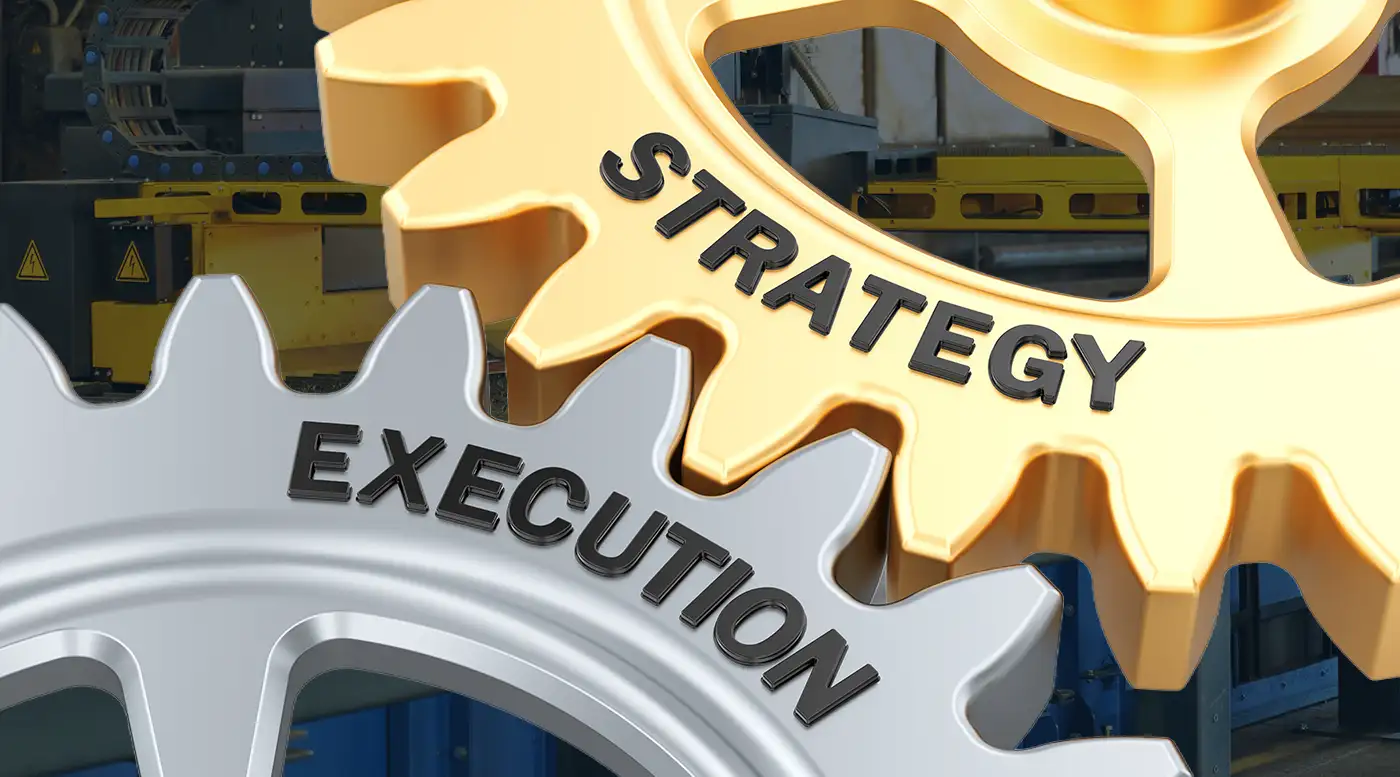
    In short, strategy is the blueprint, but execution is the engine. And if you’re missing that leadership layer, your marketing will stall, no matter how good the plan looks on paper.

    What’s the Next Step Toward Improving Your Manufacturing Marketing Strategy?

    If your marketing efforts feel disconnected from results—or if you’re unsure what’s working and what’s not—it may be time for a different approach.

    Manufacturing marketing today requires more than a list of tactics. It demands a strategy grounded in how engineers research, how Sales engages, and how AI is reshaping visibility. But strategy alone isn’t enough. You need leadership to turn it into action and measurement to guide refinement over time.

    Whether you need to build a manufacturing marketing strategy, improve lead quality, or execute a smarter plan with confidence, I’m here to help.

    Let’s talk about how Tiecas and I can help you turn your marketing into a real growth engine.

  • Why Your Manufacturing Marketing Strategy Falls Short—Even If You’re Implementing All the Popular Marketing Tactics

    Why Your Manufacturing Marketing Strategy Falls Short—Even If You’re Implementing All the Popular Marketing Tactics

    Is your manufacturing marketing strategy engineered to produce measurable business results—or is it just a checklist of disconnected activities?

    You’ve invested in all the right marketing tactics—email campaigns, social posts, SEO, and even a few videos. You’re publishing regularly, attending trade shows, and maybe you’ve even refreshed your website. But despite all that effort, your pipeline is still inconsistent, and your sales team says leads are “junk,” and executive leadership is questioning the ROI of your marketing program.

    Sound familiar?

    You’re not alone. I’ve worked with dozens of small to mid-sized manufacturers who feel stuck in this exact situation. The issue isn’t a lack of activity. It’s that many manufacturing marketing teams are busy executing tactics without a clear, documented strategy that aligns with sales goals and customer behavior. That’s why it’s common to hear: “We’re doing all this marketing, but it’s just not working.”

    Let’s be clear: you need marketing tactics to generate awareness and interest. However, tactics without strategic intent can quickly become noise. Without sales alignment, mid-funnel content, and KPIs tied to business outcomes—not just marketing outputs—you’re left chasing metrics that don’t move the needle.

    Read more about our approach to Manufacturing Marketing Strategy.

    In this blog, I’ll highlight seven hidden pitfalls that cause even the most well-funded marketing programs to fall short—and, more importantly, how to fix them.

    Marketing “Busy Work” vs. Business Outcomes: Are You Measuring What Matters?

    Let’s start with a hard truth: just because your team is busy doesn’t mean your marketing is working.

    Activity does not equal progress. However, in many manufacturing companies, marketing teams are evaluated based on the volume of their output—such as the number of social posts published, emails sent, and web pages launched—rather than whether those efforts are actually contributing to qualified opportunities or revenue.

    One of the most telling quotes I’ve heard from a frustrated CEO was this:

    “You’re measuring leads. I’m measuring revenue.”

    That disconnect says it all.

    Marketing KPIs should support—not distract from—strategic business goals. That means shifting away from vanity metrics like impressions and email open rates and toward data that reflects business impact:

    • Percentage of marketing-sourced Sales Qualified Leads (SQLs)
    • Influence on pipeline value and deal velocity
    • Contribution to key accounts or strategic segments
    • Content consumption tied to intent signals and buying stage

    It’s not that top-of-funnel awareness metrics are irrelevant. But if that’s all you’re reporting on, it’s easy to get caught in a cycle of marketing busy work that looks productive on paper but doesn’t drive meaningful sales conversations.

    A strong manufacturing marketing strategy realigns these metrics around what actually moves the business forward—and that requires tight integration with your sales team. We’ll get to that next.

    When Sales and Marketing Aren’t Aligned, Everyone Loses

    You can have the best-looking campaigns in the industry, but if your sales team doesn’t find the leads useful—or worse, ignores them altogether—your marketing strategy is broken.

    This misalignment is especially common in manufacturing companies where marketing and sales operate in silos. Marketing generates leads and passes them along, but sales says those leads aren’t “ready” or don’t fit the profile. What’s often missing is collaboration around shared definitions of lead quality, buyer intent, and sales readiness.

    Another weak link is mid-funnel content—the educational assets needed to move technical buyers from initial interest to real consideration. Engineers, specifiers, and purchasing teams don’t make impulsive decisions. They need specs, comparisons, documentation, and use cases that answer their questions at their own pace.

    That’s where sales-enablement content comes in. When done right, these tools support both self-service research and 1:1 sales conversations:

    • CAD files and 3D product models that engineers can plug directly into their design environments
    • Product configurators that allow specifiers to visualize and customize based on application needs
    • ROI calculators and performance comparison tools that speak the language of procurement

    If your marketing strategy isn’t delivering these types of assets—or if your sales team doesn’t know they exist—it’s a missed opportunity. Worse, it reinforces the perception that marketing is merely a cost center rather than a growth partner.

    The solution begins with a documented manufacturing marketing strategy that aligns sales and marketing efforts around the target audience, the content that supports the buying journey, and the contributions of both teams to revenue.

    Read my blog post: How Can Manufacturers Align Sales & Marketing to Improve Lead Conversions in Complex B2B Industrial Sales?

    Is Your Manufacturing Marketing Strategy Built for How Engineers Really Research Solutions?

    The behavior of engineers and technical buyers continues to evolve—and your strategy must keep pace. The 2025 State of Marketing to Engineers report by TREW Marketing, GlobalSpec, and Elektor offers clear evidence of these shifts:

    • 60% of the buying process happens online before engineers ever speak with a sales rep
    • 73% rely on vendor websites and technical publications as primary sources of information
    • 91% subscribe to newsletters, and 75% are open to sponsored content if it’s relevant
    • 58% use generative AI during purchasing, but their trust in AI-generated content is low (about 4 out of 10)

    In short, engineers are proactive researchers who:

    • Conduct most of their journey independently
    • Value trusted technical content
    • Expect expert-level material from websites—not generic marketing
    • Are skeptical of AI-generated content unless backed by proof of concept

    That means if your manufacturing marketing strategy still focuses on gated assets, heavy brand messaging, or generic email blasts, you’re likely out of sync with how engineers want to engage.

    Your strategy must be tuned to this behavior and make your brand the go-to expert, long before a sales conversation even begins. It’s not just about being present; it’s about being meaningful.

    What Strategy Looks Like Beyond a Content Calendar

    Let’s clear up a common misconception: a content calendar is not a strategy. It’s a scheduling tool. Important, yes—but it should come after you’ve built the strategic foundation.

    A true manufacturing marketing strategy answers these critical questions first:

    • Who are we targeting? (Buyer personas and ideal customer profiles)
    • What challenges do they face at each stage of the buying journey?
    • What types of content and channels will earn their attention—and their trust?
    • How do we measure success across awareness, engagement, and revenue impact?

    Too many manufacturers jump straight into production mode without documenting these answers. The result? Content that looks good on LinkedIn but doesn’t support the sales cycle or influence decision-makers.

    What’s missing is a living strategy document—a blueprint that goes beyond messaging themes and content topics. It should align your marketing plan with business goals, document buyer behavior insights, and map tactics to funnel stages. And it must be revisited regularly, not just once a year.

    Without that, teams struggle to:

    • Justify budgets to executive leadership
    • Prioritize high-impact initiatives over reactive requests
    • Collaborate effectively with Sales and Product Management

    It’s no wonder that the 2025 CMI Manufacturing Research found that 67% of manufacturing marketers say their content strategy is moderately effective. 13% say it is not very or at all effective, and only 20% say it is very effective.

    Without documentation, strategy becomes tribal knowledge. And when staff turnover hits—or budgets are on the line—you’re left scrambling. A documented, measurable strategy ensures continuity, accountability, and long-term performance.

    manufacturers content marketing strategy effectivness

    From Trade Shows to Digital: Evolving Your Manufacturing Marketing Strategy for Today’s Buyer

    Print isn’t dead. Trade shows still matter. But if your manufacturing marketing strategy relies solely on in-person events, brochures, and cold calls, you’re operating with blind spots in today’s digitally driven buying process.

    Trade shows can still play a valuable role—when integrated into a broader strategy. A hybrid approach can bridge the gap between awareness and demand generation. For example:

    • Use trade shows to reconnect with existing accounts and gather market feedback
    • Capture leads via interactive tools like product demonstrations
    • Follow up with personalized digital content mapped to attendee interests
    • Retarget visitors with application-specific case studies or videos

    The key is treating trade shows not as standalone events but as part of an ongoing conversation. The same applies to print ads and trade publications—they are most effective when complemented by digital follow-ups, such as targeted emails with calls to action that lead to trackable landing pages or gated downloads that guide the reader deeper into your sales funnel. Engineers and industrial professionals are willing to give up their emails in exchange for valuable content they perceive as useful to their work.

    Digital and physical marketing efforts shouldn’t compete—they should complement each other. That’s what I call integrated industrial marketing: building a unified strategy that spans multiple channels while keeping your technical audience—and their buying behaviors—at the center.

    Key Takeaways

    Let’s recap what causes even well-intentioned marketing efforts to fall short—and how to avoid these common pitfalls:

    • Tactics ≠ Strategy: A busy content calendar doesn’t guarantee business results. Strategy must come first.
    • Misaligned KPIs: If you’re only tracking vanity metrics, you’re not proving value to the business.
    • Sales Disconnect: Leads fall flat when sales doesn’t trust or use what marketing delivers.
    • Neglecting Engineers’ Research Habits: Engineers want technical content they can access on their own terms.
    • No Living Document: Without a documented, measurable strategy, it’s impossible to align teams or justify your budget.
    • Digital-Physical Silos: Trade shows still matter—but only when paired with digital follow-through in an integrated strategy.

    Let’s Build a Strategy That Drives Real Results

    If your current marketing efforts feel scattered or aren’t moving the needle, you don’t need more tactics—you need a cohesive, data-driven marketing strategy tailored to your sales process and technical audience.

    That’s where I come in.

    With over 35 years of experience in industrial marketing and a background in mechanical engineering, I help manufacturers create strategic roadmaps that align marketing efforts with sales goals, technical buyer behavior, and long sales cycles. If you’re ready to move beyond random acts of marketing, I invite you to start that conversation with me today.

    And if you already have a basic strategy in place but lack the internal resources to lead, execute, and refine it—my Fractional CMO for Manufacturers service is tailored to provide experienced industrial marketing leadership at a fraction of the cost of a full-time hire. Whether you need help developing your strategy or ongoing marketing leadership, I’m here to help you engineer a smarter path forward.

  • Fractional CMO for Manufacturers: Answers to Common Questions

    Fractional CMO for Manufacturers: Answers to Common Questions

    Many small to mid-size manufacturing companies are turning to fractional leadership to gain the strategic marketing expertise they need without the overhead of a full-time hire. In this Q&A post, we’ll explore what a Fractional CMO for manufacturers does, how the role differs from traditional marketing management, and what realistic business outcomes to expect.

    This isn’t just about outsourcing marketing tasks. It’s about bringing in focused leadership that understands the industrial sector and can drive meaningful results.

    What is a Fractional CMO for Manufacturers?

    A Fractional CMO (Chief Marketing Officer) is a part-time marketing executive brought in to lead strategy, oversee implementation, and drive measurable outcomes, without the cost of a full-time salary.

    In the context of manufacturing and industrial businesses, this role requires more than just marketing know-how. It demands a deep understanding of engineer-led buyer journeys, long sales cycles, and the unique dynamics of technical product sales. A Fractional CMO for manufacturers has the experience and expertise to lead marketing efforts that resonate with industrial buyers, procurement teams, and design engineers.

    What role does a Fractional CMO play in manufacturing marketing?

    A Fractional CMO takes ownership of the strategic marketing function—from setting direction to managing execution. Typical responsibilities include:

    • Creating a documented manufacturing marketing strategy aligned with business goals
    • Overseeing marketing campaigns, analytics, and team performance
    • Leading marketing-sales alignment to improve conversion and collaboration
    • Training internal staff and vendors to maintain consistency and focus
    • Elevating how manufacturers engage with engineering and technical audiences

    The alignment of Sales and Marketing is a particular area of focus. As cited in NetLine’s Invisible to Irresistible report, “When Sales and Marketing Aren’t Aligned, Everyone Loses.” That’s especially true in manufacturing environments where technical content, digital behavior tracking, and lead qualification must seamlessly connect across departments.

    How does the cost of a Fractional CMO compare to a full-time marketing hire?

    Hiring a full-time CMO is a significant commitment. Salary.com reports that the median salary for a Director of Marketing in the U.S. is $187,132, while a B2B digital marketing manager averages $126,864 annually, not including benefits, bonuses, or onboarding time.

    Compare that to my Fractional CMO for Manufacturers service, which starts at $6,100 per month. There’s no expense for recruitment, onboarding, or long-term employment commitments. And by working with someone who already understands the industrial sector, results come faster—without the ramp-up time or costly trial-and-error.

    A Fractional CMO model offers a cost-effective alternative: executive-level expertise at a predictable, lower monthly investment.

    What types of results can manufacturers expect?

    The impact of a Fractional CMO can be both immediate and lasting. Some outcomes commonly seen include:

    • A structured, measurable marketing strategy built for complex buying cycles
    • Improved lead quality and higher engagement with technical buyers
    • Greater alignment between marketing activity and sales objectives
    • Better website conversion, messaging clarity, and digital presence
    • Cross-functional collaboration that strengthens internal capabilities

    Many manufacturing companies also see value in having a dedicated leader who can prioritize long-term strategy over daily marketing execution and guide the team accordingly.

    What are the broader benefits of using a Fractional CMO?

    Beyond tangible marketing results, the model offers several operational and organizational benefits:

    • Strategic ownership: A fractional CMO doesn’t just supervise vendors—they take control of the marketing function and ensure alignment with overall business objectives.
    • Scalability: The engagement can evolve over time based on business needs. The model is flexible, whether it’s a six-month strategic push or a multi-year leadership role.
    • Knowledge transfer: Even after the CMO steps away, the processes, KPIs, and messaging frameworks built during the engagement continue delivering value.
    • Team development: Internal marketing teams often gain clarity and confidence by working alongside experienced leadership. Sales teams benefit, too, from tighter alignment and shared goals.

    These advantages are especially valuable for manufacturers looking to transform marketing from a cost center into a performance-driven growth engine.

    Why consider this approach over hiring an agency or a less experienced marketer?

    Agencies can be helpful, but outsourced services can become disjointed or misaligned without strong internal leadership. Entry- to mid-level marketers may be adept at managing tasks, but they rarely bring the strategic insight or technical fluency needed in industrial marketing.

    What’s missing is leadership that understands both manufacturing business goals and the marketing systems needed to support them. A Fractional CMO for manufacturers fills that gap with experience, focus, and accountability—without the full-time commitment.

    What should you look for in a Fractional CMO for manufacturers?

    Not all Fractional CMOs are the same. Here are some qualifications that matter:

    • A background in engineering or technical fields to quickly grasp complex products and buyer behavior
    • Proven track record working with manufacturers and industrial distributors
    • The ability to document strategy, define KPIs, and drive measurable results
    • Case studies, project portfolio and client testimonials that demonstrate success
    • A clear handoff plan so your team retains and sustains marketing momentum

    For example, one recent assignment involved a manufacturer with low engagement, few qualified online leads and no clear strategy. Read the case study, Manufacturing Content Marketing Helps Improve Industrial Digital Marketing KPIs and Achieve Goals as proof of results.

    Start the conversation

    Marketing leadership shouldn’t be an afterthought. A Fractional CMO could be the right solution if your manufacturing company is ready to move beyond tactics and build a strategic growth engine.

    Start a conversation today to explore whether this model is a good fit. Let’s talk about your current challenges and how expert-level leadership can help accelerate results, without the cost and complexity of hiring full-time.

  • Rethinking Industrial Lead Generation: How Modern Manufacturing Marketing Drives Sales Conversations

    Rethinking Industrial Lead Generation: How Modern Manufacturing Marketing Drives Sales Conversations

    When it comes to industrial lead generation, I often hear, “We just need more prospects to talk to our sales team,” when speaking with marketing managers, business development professionals, and company leaders at manufacturing and industrial companies.

    The intent is clear—get in front of more qualified prospects. However, the frustration is just as real: reaching the right people is more challenging than ever.

    Today’s B2B buyers don’t follow the old playbook. According to research from Demand Gen Report, buyers are nearly 70% through their purchasing journey before they ever speak with a salesperson, and 80% of the time, they are the ones initiating contact, not the other way around.

    In other words, by the time your sales team gets “face time,” the buyer has already formed strong preferences based on what they found online.

    If your marketing strategy is still playing a supporting role—just making brochures, managing trade shows, and updating the website—it’s time to rethink that model. Modern manufacturing marketing must lead the charge in industrial lead generation. It sets the stage for sales conversations by attracting and nurturing the right people long before they reach out.

    Read how a tailored Manufacturing Marketing Strategy can help align your sales and marketing efforts to generate better leads.

    The Reality of Today’s Industrial Lead Generation Process

    Let’s start with the elephant in the room: most of your buyers are invisible. They browse your site and read case studies if you have them on your website. But they rarely fill out your contact form. And they certainly don’t call your sales team—at least not until they’re ready to talk to them.

    A 2024 benchmark report from 6sense found that average form-fill rates across B2B websites hover around just 3.7%, which means the overwhelming majority of buyers are researching anonymously. They’re engaging with your brand, but not in a way your sales team can see or act on directly.

    This silent behavior makes it incredibly difficult for traditional outbound sales tactics to be effective. Cold calls, unsolicited emails, and generic sales outreach often fall flat because the buyer doesn’t need or want them. They’re already five steps into their journey before your rep even knows they exist.

    That’s why your industrial lead generation efforts must shift focus to meet buyers where they are—early in the research phase. This requires a marketing strategy that emphasizes discoverability, education, and trust-building over time.

    Why Industrial Lead Generation Starts With a Strong Online Presence

    A strong online presence isn’t just about credibility anymore, but survival. In today’s anonymous buying environment, your website and digital content are often the first (and sometimes only) interaction prospects have with your company. If those assets don’t engage and educate, you’re losing potential leads even before you know they exist.

    Yet many manufacturers still treat their websites like static brochures—filled with product-centric content, company history, and a contact page buried at the bottom. That approach doesn’t match how technical buyers research. They expect more.

    Your website must now function as a sales enabler—a digital gateway that helps visitors quickly understand your capabilities, see your differentiation, and envision how you can solve their problems.

    Key elements of a high-performing site that supports industrial lead generation include:

    • Clear messaging that speaks to engineers, operations, and procurement professionals—not marketing fluff
    • Logical site structure and navigation that guides visitors to relevant solutions or product categories with minimal clicks
    • Helpful, application-focused content like CAD files, selection guides, case studies, and spec sheets
    • Fast-loading, mobile-friendly pages to support researchers across devices and geographies
    • Calls to action tailored to different stages of the buying journey—not just “Contact Us” forms

    Your buyers are evaluating vendors long before they talk to sales. If your website isn’t positioning you as a knowledgeable, trustworthy solution provider, your competitors will.

    In fact, LinkedIn’s B2B Institute reports that 95% of potential buyers aren’t in the market to buy today, which makes it even more critical to stay visible and relevant during the long consideration phase.

    Don’t let your digital presence be an afterthought. A strategically planned and well-executed industrial website design is foundational to building awareness and trust.

    Stop Thinking of Manufacturing Marketing as Just Sales Support

    It’s time to retire the outdated idea that marketing’s role is to “support” sales by making brochures, managing trade shows, and updating the website.

    Marketing preps the market for industrial lead generation in the current digital-first buying environment. It’s responsible for attracting the right people, educating them, and nurturing their interest until they’re ready for a productive conversation with Sales.

    That shift requires a different mindset—one where Marketing is not a service department but a strategic growth driver.

    When Marketing and Sales are aligned around this shared purpose, the results improve across the board:

    • Salespeople spend less time cold prospecting and more time closing
    • Leads are better informed and further along in their buying journey
    • Conversations are more focused and productive from the start

    To make this shift, marketing efforts must be built on educational, customer-focused content, not just product specs and features (Of course, they are important, but not enough by themselves). Engineers and technical buyers want substance: white papers, how-to articles, comparison guides, and application-specific insights. They prefer to consume this information at their own pace.

    That’s where industrial content marketing plays a pivotal role. It fuels your visibility, drives organic traffic, and creates engagement with prospects long before your sales team ever gets involved.

    You Don’t Need More Marketing Tactics—You Need a Strategy

    When sales are slow or leads dry up, the knee-jerk reaction is often to add more marketing tactics—launch a Google Ads campaign, redesign a brochure, or try a new email platform. But without a solid roadmap, these activities rarely deliver lasting results.

    Tactics are tools, not solutions.

    What most manufacturers really need is a well-thought-out manufacturing marketing strategy—one that connects your business goals, sales process, and customer journey into a cohesive plan.

    Take a step back and ask yourself:

    • Who are we trying to reach? (Go deeper than industry, company size, etc.)
    • What problems are they trying to solve? (Customer-centric)
    • How do they research and evaluate solutions? (Google’s AI Overviews have turned this part on its head)
    • What kind of experience does our digital presence create? (Are you guiding visitors to the next logical step?)

    The strategy brings alignment. It ensures that your marketing works in sync with your sales efforts, not just adding noise.

    If you’re frustrated by poor lead quality, missed opportunities, or marketing efforts that feel disconnected, it may not be your tactics that are broken—it’s the absence of a good manufacturing marketing strategy.

    Key Takeaways:

    • Buyers are in control—most complete 70% of the buying journey before talking to Sales
    • Your website is your frontline sales tool, not a digital brochure
    • Marketing must set the stage in industrial lead generation, not just support sales
    • Sales and Marketing alignment is essential for qualifying and nurturing leads effectively
    • Without a strategy, tactics fail—you need a plan tailored to your business, sales processes, and buyers

    Let’s Turn Your Website and Manufacturing Marketing Into a Sales Conversation Starter

    If you’re struggling to connect with the right people—and watching too many promising leads go silent—it may be time to rethink how your marketing is set up to support sales.

    Let’s start with strategy.

    We’ll help you create a manufacturing marketing strategy that aligns your brand, website, and content with how your buyers actually buy. That strategy becomes the blueprint for everything else—content, website design, sales enablement tools, and more.

    Contact Tiecas to start a conversation about building a smarter lead-generation engine for your industrial business.

  • Industrial Marketing Strategy for Manufacturers—17 Questions Product Managers Must Ask

    Industrial Marketing Strategy for Manufacturers—17 Questions Product Managers Must Ask

    An industrial manufacturing marketing strategy isn’t just a to-do list filled with tactics like “update the website” or “send an email campaign.” If you’re a product manager at a manufacturing company, your responsibilities extend beyond managing a team of design engineers. You also need to effectively position your products, promote them, and support them throughout the buying journey—a more digital, complex, and engineer-driven journey than ever.

    According to Gartner, 75% of B2B buyers now prefer a sales experience without direct interaction with sales representatives.

    The same report said, “It’s projected that by 2025, 80% of B2B sales interactions between suppliers and buyers will occur through digital channels.” (​Gartner)

    For a quick overview of manufacturing marketing strategy, read my post, “Why Is a Marketing Strategy for Manufacturers Critical? Your Questions Answered.”

    In this blog, I’ll walk you through 17 strategic questions every industrial product manager should ask before developing a marketing strategy for their manufacturing company. These questions are grouped by topic to help you see the bigger picture—and uncover what might be missing from your current approach.

    And if you don’t have all the answers yet, that’s okay. That’s where I can help.

    I have written this post from the perspective of a Product Manager, but you can switch roles to Marketing Manager or Director at a manufacturing company. Grab a cup of coffee or your favorite beverage, and let’s dive in.

    Defining the Right Industrial Marketing Strategy for Manufacturers

    Who Are We Selling To—and Why Should They Choose Us?

    If your product team is busy innovating the next-generation valve or process automation device, and if marketing still feels like a disconnected effort, you’re not alone. I’ve seen this time and again: product managers understand the technical landscape but often underestimate the strategic depth required to market to industrial buyers.

    This first group of questions lays the foundation. Before you dive into tactics, you must clarify who you’re trying to reach, what matters to them, and how your product addresses their needs better than the alternatives. Here’s where to begin:

    1. Who exactly is our target audience—and what roles do they play in the buying process?

    This seems like Marketing 101, but the buying process is rarely linear or single-threaded for manufacturers. A plant engineer might influence the specs, maintenance managers care about downtime and durability, while procurement focuses on price and delivery. Do you know which personas matter most at each stage of the buying journey? If not, you’re flying blind.

    ! Tip: Identifying buying roles early helps ensure your messaging, content, and sales tools speak directly to each decision-maker’s concerns and challenges.

    2. What industries and applications are our products best suited for—and which verticals should we prioritize?

    Not all market segments offer the same growth potential or margin. Are your valve and actuator lines gaining traction in hydrogen production or better positioned in water/wastewater treatment? Are you being proactive in targeting emerging applications or simply reacting to RFQs?

    ! Tip: Industrial marketing strategy for manufacturers starts with a thoughtful focus. Trying to be everything to everyone often results in shallow engagement and a wasted budget.

    3. What are our core differentiators—beyond just technical specifications?

    Let’s be honest—most technical buyers assume everyone meets the minimal specs. So, what makes you stand out? Is it the responsiveness of your engineering support? Shorter lead times? Proven lifecycle performance under extreme conditions? These kinds of differentiators matter in a crowded, commoditized industrial market.

    Suppose you can’t clearly articulate why someone should choose your solution over a competitor’s, especially during early-stage research. In that case, creating the right messaging on your website and communicating it to the sales team or distributors will be challenging.

    4. Is our messaging aligned with our positioning, or are we blending in with commodity providers?

    Too many manufacturers bury their value proposition under generic language like “high-quality,” “cost-effective,” or “durable.” Those words don’t differentiate; they disappear. If your messaging sounds like everyone else’s, it’s probably not driving engagement or building trust. (Read parity in value propositions).

    ! Tip: Remember: engineers want substance, not slogans. Clear positioning supported by evidence makes your brand memorable—and credible.

    These four questions are at the heart of your industrial marketing strategy for manufacturers. They help product managers step back and evaluate not just what the company makes, but why it matters to the people who buy, use, and recommend it.

    Supporting Sales Through Marketing for Product Managers in Manufacturing

    What Does Sales Really Need From Us—and Are We Delivering It?

    In many manufacturing companies, there’s a disconnect between product management, marketing, and sales—especially when it comes to complex, engineer-driven buying decisions. As a product manager, you’re uniquely positioned to bridge that gap. But you need to ask the right strategic questions to do that effectively.

    These next four questions focus on aligning your marketing efforts with the realities of industrial sales, not just generating leads but enabling your sales team with the insights and tools they need to convert them.

    You may want to read my earlier post, How Can Manufacturers Align Sales & Marketing to Improve Lead Conversions in Complex B2B Industrial Sales?

    5. What role does marketing play in supporting our sales team through complex, technical sales cycles?

    Manufacturing marketing isn’t just about brand awareness or trade show displays. It’s about supporting a high-consideration sales process with technical content, ROI justification tools, and sales enablement resources that help buyers make informed decisions.

    ! Tip: If your sales team is still creating their own slide decks or forwarding outdated PDFs to prospects, that’s a red flag. Marketing should actively enable sales, especially for long-cycle, specification-heavy decisions.

    6. Are we providing the right tools and content to move prospects from awareness to decision?

    Marketing content must do more than attract attention—it must educate, guide, and support buying committees. Do you have:

    • Application notes or case studies that prove field performance?
    • Selection guides or comparison matrices for evaluating your product against alternatives?
    • Engineering calculators or configurators that simplify decision-making?
    • Downloadable CAD files to shorten the design process?

    These assets are not just helpful—engineers and technical buyers doing self-guided research expect them.

    ! Tip: If your website doesn’t provide content that aligns with the buying journey, your competitors’ sites will.

    7. Are we aligned on what defines a qualified lead—and how to nurture it?

    Lead quantity means very little if Sales doesn’t trust Marketing’s leads. Do you have a shared definition of a Marketing Qualified Lead (MQL) and a Sales Qualified Lead (SQL)? Are you scoring leads based on engagement with specific technical content, not just form fills?

    Lead nurturing also can’t stop at the first email. In long B2B industrial buying journeys, you need a multi-touch approach that keeps your brand top of mind through useful, relevant content over time.

    ! Tip: Ask Sales what would make a lead “sales-ready.” Then, reverse-engineer your lead nurturing process to match those criteria.

    8. Do we have a feedback loop between Sales and Marketing, and are we using it to improve lead quality?

    Too often, the handoff between Marketing and Sales feels like a black hole. Without regular feedback, Marketing can’t optimize campaigns or content, and Sales doesn’t get better leads. Are you holding joint meetings? Reviewing what content supports conversations? Sharing wins and losses?

    ! Tip: A closed-loop system between Sales and Marketing isn’t optional—it’s how high-performing teams continuously improve results.

    As you can see, this group of questions shifts the focus from surface-level marketing activity to meaningful sales alignment. As a product manager, you don’t need to own every marketing tactic—but you do need to ensure the strategy connects the dots between product value, buyer needs, and sales success.

    Generating High-Quality Leads Through B2B Manufacturing Marketing

    Are We Getting the Right Leads—or Just More Clicks?

    Traffic isn’t the problem. Even small to mid-sized manufacturers can generate website visits, email opens, and ad impressions. The real question is: Are you generating leads that convert into real business opportunities—or just filling the top of the funnel with noise?

    Manufacturing marketing is not about casting the widest net; it’s about generating qualified leads who are ready to engage in meaningful conversations. And that means evaluating not just how many leads you generate but whether they’re the right ones for your business.

    This group of questions is designed to help product managers assess the health of their lead generation efforts—because more isn’t better if it’s not moving the needle.

    9. How can we generate more qualified leads that match our ideal customer profile?

    Most manufacturers say they want better leads, but few have taken the time to clearly define their Ideal Customer Profile (ICP)—the industries, company sizes, job roles, and applications that align best with their product and sales goals. Without that clarity, even the best marketing campaigns result in low-quality leads that Sales won’t pursue.

    I’ve also seen a trend across the B2B space, especially in industrial sectors, of shifting the focus from lead quantity to lead quality. It’s not about filling your CRM with contacts—it’s about attracting the ones that are most likely to convert.

    ! Tip: When Marketing and Sales are aligned on the ICP and focus on targeted campaigns, lead quality improves—which matters far more in long industrial sales cycles.

    10. What’s our strategy for long-cycle lead nurturing—especially for engineers and decision-making committees?

    Long buying cycles with multiple stakeholders are the norm in industrial sales. You often deal with engineers, plant managers, procurement professionals, and compliance teams, all of whom play different roles in decision-making.

    That’s where Account Based Marketing (ABM) can make a real difference. ABM allows you to focus your marketing efforts on a specific set of high-value accounts and tailor your messaging to each decision-maker involved.

    According to a joint Marketo and Reachforce study, companies that implement ABM become 67% better at closing deals when they align their sales and marketing teams around shared account-based strategies. Source: RollWorks—17 ABM Statistics.

    For more details on using ABM in manufacturing, read my post: How Manufacturers Can Win Big with Account Based Marketing (ABM) and Industrial Content Marketing.

    11. Are we tracking lead quality and marketing ROI or measuring the wrong things?

    It’s one thing to count leads. It’s another to track how they move through a complex sales cycle and eventually turn into revenue. Attribution is one of the biggest challenges in industrial marketing. When buying decisions involve months of research, multiple touchpoints, and various influencers, how do you know what really moved the needle?

    If you only measure top-of-funnel activity like clicks or downloads, you’re missing the bigger picture and potentially undervaluing Marketing’s real contribution to revenue.

    These three questions are critical to shifting your marketing from a volume game to a value-generating engine.

    As a product manager, you can’t afford to rely on vanity metrics or assumptions. You need visibility into lead quality and confidence that your marketing investments are driving real business outcomes.

    Elevating Visibility with Digital Marketing and Thought Leadership

    Are We Getting Found Online and Are We Trusted?

    Most industrial buying journeys these days begin online, and they start long before your sales team ever gets involved. If you’re not easily discoverable—or if your online presence doesn’t build trust—you’re at risk of being eliminated from consideration before you even know you were in the running.

    This section focuses on how to raise visibility with the right audience and establish credibility with the engineers and technical buyers who matter most to you.

    12. Are we showing up in organic search for long-tail, technical keywords?

    Your customers aren’t searching for “valves” or “flowmeters.” They’re searching for phrases like “best valve for cryogenic service” or “SIL2-certified pressure transmitter for hazardous locations.” These long-tail, intent-rich searches align closely with specific pain points and applications.

    However, as Google’s AI Overviews and other GenAI-enabled features reshape online searches, traditional SEO strategies aren’t enough. You need structured content that aligns with user intent so that AI can interpret and show it effectively.

    For a deeper dive into this evolving topic, read my blog: How AI Overview Is Changing Manufacturing Content Marketing and SEO—And What You Can Do About It.

    13. Are we creating application-specific content that speaks to real-world problems?

    You can’t win trust with marketing fluff. Engineers want evidence, examples, and technical depth. Yet many manufacturers rely too heavily on broad claims and generic messaging.

    What resonates instead?

    • Case studies in niche industries
    • White papers addressing application-specific performance
    • Videos and blogs that demonstrate performance in real-world conditions

    So, what sources of information do engineers use when considering products? This chart from TREW + GlobalSpec: 2025 State of Marketing to Engineers explains it well.

    Sources of information used by engineers when considering products

    14. Are we leveraging technical SMEs to build trust and credibility in our space?

    There’s no better voice than your own internal Subject Matter Experts (SMEs). In industrial and manufacturing marketing, the phrase “one engineer to another” carries a lot of weight.

    Your SMEs bring authenticity and technical depth that marketers alone can’t and shouldn’t try to duplicate (Unless you are a Marketing Engineer like me. 😊). But that doesn’t mean they have to write every word. Marketing can and should do the heavy lifting—researching, drafting, and structuring the content—while your SMEs add their valuable insights and lend their names.

    SME-driven content builds authority, improves engagement, and builds trust with your target audience.

    For more on why this matters, read my blog: Content Marketing for Manufacturers: What Makes It Different and Why It’s Challenging.

    Online visibility isn’t just about algorithms and analytics. It’s about becoming a reliable, go-to resource for engineers in the research and evaluation stages. You’re not even in the game if your content isn’t being found and/or trusted.

    Aligning Strategy, Execution, and Resources

    Are We Equipped to Do This Right—or Spinning Our Wheels?

    You can have the right audience, the right message, and the right tools, but your marketing strategy will stall without proper execution and resource alignment. This final set of questions helps industrial product managers assess whether their organization is truly set up for success or merely going through the motions.

    15. Is our website optimized for conversion, or just serving as a digital brochure?

    Many industrial websites function as static repositories of product information, lacking the elements necessary to engage and convert visitors. An outdated, informational website can be transformed into a robust sales tool by incorporating the right messaging and creating content that engineers and technical professionals seek from their vendors. This includes detailed product specifications, application notes, CAD files, and intuitive navigation that guides users toward logical, actionable steps.​

    ! Tip: Your website should inform and facilitate the buyer’s journey, effectively turning visitors into leads.

    For insights on redesigning industrial websites for optimal performance, visit Industrial Website Design.

    16. Are we documenting our strategy and reviewing it regularly with data?

    A well-documented content marketing strategy is crucial for aligning efforts and measuring success. According to the 2023 Manufacturing Content Marketing report by the Content Marketing Institute, “Only 32% of manufacturing marketers have a documented content marketing strategy.”

    Documented strategy for manufacturing content marketing

    Regularly reviewing this strategy against performance metrics ensures that marketing activities remain aligned with business objectives and can adapt to changing market conditions.​

    ! Tip: A documented strategy is a roadmap, enabling teams to track progress and make informed adjustments.

    Explore how a strategic roadmap can benefit manufacturers: Strategic Roadmap.

    17. Do we have the in-house capabilities—or should we bring in an industrial marketing expert?

    Even the most capable product teams may lack specialized marketing expertise. Assess whether your organization has the internal resources—such as content creators, strategists, and digital marketers—with deep knowledge of the industrial sector. If not, partnering with an industrial marketing expert can provide the necessary insights and execution capabilities to reach and engage your target audience effectively.​

    ! Tip: Collaborating with specialists who understand the nuances of B2B industrial marketing can accelerate results and enhance marketing effectiveness.

    Learn more about leveraging fractional CMO services: Fractional CMO for Manufacturers.

    These final questions serve as a reality check. A strategy is only as effective as its execution. As a product manager, ensuring that your marketing efforts are well-resourced, data-driven, and aligned with tangible business goals is essential for achieving meaningful outcomes.

    If this blog has raised questions or addressed some of your concerns, you already know that a checklist of tactics won’t cut it. You need a strategic, data-driven roadmap that aligns with your business goals and speaks directly to your technical audience.

    That’s precisely what I do.

    With over 35 years of hands-on experience in industrial and manufacturing marketing, I’ve helped manufacturers like you turn scattered marketing efforts into cohesive strategies that generate real results. Whether you need help developing your positioning, prioritizing campaigns, aligning with Sales, or redesigning your website to become a sales asset, I’m here to guide you.

    Let’s start a conversation. Contact me to explore how we can build the right industrial marketing strategy for manufacturers.

  • Content Marketing for Manufacturers: What Makes It Different and Why It’s Challenging

    Content Marketing for Manufacturers: What Makes It Different and Why It’s Challenging

    Content marketing for manufacturers is very different from regular B2B or B2C marketing. Manufacturing companies face unique challenges—long sales cycles, highly technical products, and multiple decision-makers—making traditional marketing tactics less effective.

    Unlike industries with shorter sales cycles, manufacturers must build trust over time through educational and technical content that speaks directly to engineers, procurement teams, and executives.

    Yet, many manufacturers struggle with implementing a strategic content marketing approach. Without a clear understanding of what works in the industrial space, efforts can lead to low engagement and poor-quality leads.

    In this blog, I’ll share insights from my 35+ years of working with manufacturers and industrial companies to highlight why content marketing for manufacturers is different and the challenges that come with it.

    Why Content Marketing for Manufacturers is Important

    Manufacturing content marketing has become a pivotal strategy for raising brand awareness, generating leads, and driving sales. The proof of its effectiveness is clear, with 74% of companies reporting an increase in lead generation due to their content marketing efforts. (Source: Forbes).

    For B2B brands, the top marketing channels resulting in ROI in 2024 were:

    1. Website, blog, and SEO
    2. Paid social media content
    3. Social media shopping tools.

    (Source: HubSpot).

    Approximately one in four manufacturing marketers reported that their organization spends 25% to 49% of their total marketing budget on content marketing. (Source: The Content Marketing Institute).

    These findings should convince you that a well-executed content strategy attracts potential customers and nurtures them through the sales funnel, ultimately leading to increased sales.

    How Content Marketing for Manufacturers Differs from General B2B

    Content marketing for manufacturers works at a different level of complexity than general B2B marketing because manufacturers often sell custom-engineered and highly technical products with multiple configurations, materials, and specifications.

    While product datasheets and technical specifications are essential—especially for design engineers—successful manufacturing content must go beyond that, providing real-world applications, problem-solving insights, and industry expertise.

    Unlike many B2B industries with relatively short sales cycles, manufacturing sales take longer and involve multiple decision-makers, from engineers and procurement teams to C-suite executives. Each of these audiences has unique concerns, requiring targeted content that moves beyond marketing fluff to deliver credible, data-backed insights that influence purchasing decisions.

    Translating technical expertise into engaging and customer-centric content is another major challenge. Many generalist marketers struggle with this, which is why a deep understanding of the engineering and manufacturing buying journey is critical.

    My experience as a Marketing Engineer—bridging technical knowledge with strategic marketing—has shown me that industrial content must speak the language of engineers while still being engaging for decision-makers who need non-technical content. It doesn’t mean you should pack your content with technical jargon, nor should you dumb it down.

    While thought leadership plays a role in all B2B marketing, in manufacturing, it’s a key differentiator when companies offer similar products or solutions. When there’s parity in value propositions, positioning a brand as an industry authority through expert content—such as whitepapers, application notes, and case studies—can create a competitive edge and establish trust with skeptical buyers.

    Manufacturers must also rethink traditional SEO strategies. Standard keyword research tools often fail to capture niche, long-tail search queries used by engineers and procurement teams when searching for solutions.

    This is where intent-driven SEO combined with Generative AI can help uncover these specialized keywords. Read my blog, Could Generative AI Revolutionize Your Industrial SEO Strategy? to explore how AI can refine industrial keyword research.

    Challenges in Industrial and Manufacturing Content Marketing

    Many manufacturers struggle with content marketing, not because they aren’t creating enough content, but because they face unique hurdles that general B2B marketers don’t encounter.

    Here’s a unique challenge—your content must address the different needs of two types of buyers. On the one hand, you have the specifiers, usually design engineers. They need product specs, performance characteristics, configurators, CAD drawings, etc. On the other hand, you have functional buyers—the purchasing department. They need content about delivery time, logistics, warranties, vendor background and credibility, after-sales service, etc. One-size-fits-all content is not going to cut it.

    According to the Manufacturing Content Marketing Benchmarks, Budgets, and Trends: Outlook for 2025 report from the Content Marketing Institute, only 20% of manufacturing content marketers say their strategy is very effective, while 67% rate it as only moderately effective. Only 13% admit their content marketing strategy is ineffective.

    The challenges don’t stop at strategy. The report highlights the top obstacles manufacturing content marketers face:

    • Creating the right content for our audience (45%)
    • Differentiating our content (44%)
    • Repurposing content effectively (42%)
    • Optimizing for SEO (34%)
    • Creating high-quality content (32%)
    challenges in content marketing for manufacturers

    Another major hurdle is measuring content marketing ROI; without clear attribution models, it’s difficult to tie content marketing efforts to revenue growth, making it harder to justify budgets and prove effectiveness.

    Measurement challenges in content marketing for manufacturers

    These challenges underscore the importance of having a well-defined content strategy that aligns with the industrial buyer’s journey, incorporates SEO best practices, and ensures content is engaging and technically accurate.

    I’ll cover these topics in more depth in a future blog post, but for now, the key takeaway is clear: manufacturing content marketing isn’t just about producing more content—it’s about creating the right content that speaks to the right audience.

    Building an Effective Content Marketing Strategy for Manufacturers

    For manufacturers, content marketing isn’t just about getting found online, which is challenging enough—it’s more about converting traffic into real opportunities and guiding technical buyers through complex purchasing decisions. Engineers and procurement teams rely on informative, problem-solving content rather than promotional messaging.

    That’s why a structured, strategic approach is essential to ensure content delivers real value at every stage of the buying process.

    The key takeaways are:

    1. Align Content with the Buyer’s Journey
    Manufacturing buyers go through multiple research phases before making a decision. Content must address each stage—from educational blogs for awareness to technical whitepapers and case studies that support evaluation and purchase decisions. Mapping content to the buyer’s journey ensures it remains relevant and impactful.

    2. Leverage Thought Leadership for Competitive Differentiation
    In an industry where products often have parity in value propositions, thought leadership content can be a key differentiator. Blogs written by Subject Matter Experts (SMEs), industry trend reports, and application-based insights help manufacturers establish authority and build trust with engineers and decision-makers.

    3. Make SEO More Intent-Driven
    Traditional keyword research tools often fail to uncover niche, long-tail search queries used by engineers and procurement teams. A more intent-driven SEO approach and Generative AI can help manufacturers identify and optimize for specialized search terms.

    4. Track Performance and Prove ROI
    Manufacturing sales cycles are long, making measuring content marketing ROI a challenge. Manufacturers can track lead nurturing, engagement metrics, and conversion rates using marketing automation and CRM integration to tie content efforts directly to outcomes.

    A successful industrial content marketing strategy requires a well-planned roadmap that aligns content with business objectives, sales processes, and customer needs. If you need a structured, data-driven approach, explore our Strategic Roadmaps & Fractional CMO service to build a content strategy that drives measurable results.

    Partner with an Industrial Marketing Agency that Understands Manufacturing

    A well-executed content marketing strategy for manufacturers is essential for building trust, authority, and long-term customer relationships.

    At Tiecas, we don’t take a one-size-fits-all approach to industrial marketing. With 35+ years of experience working exclusively with manufacturers, distributors and engineering companies, we know what it takes to create content that resonates with engineers and technical buyers.

    Let’s build a content strategy that turns technical expertise into a competitive advantage that attracts, nurtures, and converts high-value industrial leads.

    Contact us today to discuss how we can strengthen your manufacturing content marketing efforts.

  • Why Is a Marketing Strategy for Manufacturers Critical? Your Questions Answered

    Why Is a Marketing Strategy for Manufacturers Critical? Your Questions Answered

    A well-defined marketing strategy for manufacturers is critical to achieving success in today’s globally competitive industrial markets. By understanding buyer needs and crafting targeted campaigns, manufacturers can effectively differentiate themselves, build trust, and drive sustainable growth through quality content and thoughtful messaging.

    Let’s dive in.

    Why is it critical to understand your audience in a successful marketing strategy for manufacturers?

    Understanding your audience is the foundation of any effective marketing strategy for manufacturers. It ensures your efforts focus on addressing real needs, crafting relevant messaging, and driving results that align with both customer expectations and your business goals.

    Let’s delve deeper by asking:

    How do we define our ideal customer profile in the manufacturing industry?

    An ideal customer profile is defined by analyzing factors such as industry, application, company size, and decision-maker roles. This clarity helps focus your marketing efforts on the most profitable opportunities. However, it is easy to fall into the trap of using your best customer as the ideal profile. The problem with that approach is that they already know and like you—that’s why they do business with you. Instead of restricting yourself, use your best customer as a foundation to build new, more focused personas that can help you expand into untapped markets.

    What factors should we consider when segmenting industrial buyers by needs, applications, or industries?

    Consider buyer personas, application-specific challenges, and industry trends. Segmentation allows tailored industrial marketing strategies that address unique requirements, improving engagement and conversion rates.

    Why is understanding customer pain points crucial for creating a targeted marketing strategy?

    Understanding pain points allows you to position your products as solutions, aligning messaging with customer challenges. This approach builds trust and fosters long-term relationships, especially in the competitive industrial market.

    These questions and answers are the building blocks in creating effective strategic roadmaps for manufacturers.

    What types of content are essential for an effective industrial marketing strategy?

    Industrial content marketing is a proven strategy for generating high-quality inbound leads. Content is the backbone of an effective industrial marketing strategy. It educates, builds trust, and supports complex decision-making processes for industrial buyers. Delivering the right content at the right time can significantly impact lead generation and conversion.

    However, it is not just about pumping out more content.

    “Manufacturing marketers who want to differentiate their content should focus on quality and unique stories. Eighty percent of those who always/frequently differentiate their content said they do so by producing better quality content than their competitors.” (Source)

    Let’s explore further by asking:

    What types of content resonate most with industrial buyers?

    Technical buyers value detailed case studies, application guides, and whitepapers that address specific challenges. These formats provide actionable insights and demonstrate your expertise.

    According to the research done by NetLine, there is a clear connection between a user’s choice of format and their readiness to buy. See the chart below.

    Content format shows buying intent

    How can we effectively communicate technical specifications and our value proposition?

    Use clear, concise content formats like comparison charts, technical datasheets, and explainer videos. These tools simplify complex concepts and show how your solution addresses real-world needs.

    How can we create case studies and testimonials demonstrating success in industrial applications?

    Focus on real-world scenarios with measurable outcomes. Highlighting problems solved, cost savings, or efficiency gains proves your value to prospective customers. Although NDAs may restrict the use of customer names, anonymized case studies or generic descriptions can still convey credibility effectively.

    Which digital platforms should we focus on to make our marketing strategy for manufacturers more effective?

    Digital platforms are essential for a manufacturing marketing strategy, providing opportunities to engage buyers and generate qualified leads. However, not all platforms deliver equal value. Choosing the right ones ensures your resources are directed where they matter most.

    Let’s continue asking more questions:

    Which platforms are most effective for reaching industrial buyers?

    LinkedIn is a go-to platform for B2B manufacturers, offering access to decision-makers. Industry-specific forums and trade directories also provide valuable opportunities to connect with technical audiences.

    How can we optimize SEO and PPC to improve visibility in relevant searches?

    Focus on long-tail keywords aligned with buyer intent and invest in PPC campaigns targeting high-value search terms. This dual strategy enhances organic visibility and ensures paid efforts deliver measurable ROI. Refer to my earlier blog, “Effective SEO Strategies for Manufacturers and Industrial Companies in 2024.”

    What role does social media play in industrial marketing, and which platforms should we prioritize?

    Social media supports thought leadership and brand awareness. LinkedIn and YouTube are ideal for technical content, while Facebook can help amplify visibility for broader audiences. Choosing platforms based on your target audience ensures maximum impact.

    “62% of manufacturing marketers said organic LinkedIn was extremely or very effective.”
    Source: The Content Marketing Institute.

    LinkedIn usage by manufacturing content marketers

    Why is sales–marketing alignment so crucial for a successful industrial marketing strategy?

    Aligning sales and marketing ensures a seamless customer experience, eliminates wasted efforts, and drives measurable results. Collaboration between these teams is critical for converting leads into loyal customers and maximizing your marketing ROI.

    Let’s break this down further:

    How can sales and marketing alignment improve lead conversion?

    Shared goals, clear communication, and integrated lead tracking ensure sales receives high-quality leads while marketing refines strategies based on feedback from the field.

    What metrics should we use to measure campaign effectiveness?

    Metrics like Marketing Qualified Leads (MQLs), Sales Qualified Leads (SQLs), and lead-to-customer conversion rates help both teams track performance and optimize processes. See Lead Quality: Why It’s More Important Than Quantity for Manufacturing Marketing Success.

    How can marketing automation support this alignment?

    Marketing automation streamlines lead nurturing, tracks interactions, and provides actionable insights. These tools ensure sales and marketing stay aligned and focus on high-value opportunities.

    How can manufacturers navigate complex decision-making processes in industrial sales?

    Industrial sales often involve multiple stakeholders, long sales cycles, and technical evaluations. A well-structured strategy ensures you can address these complexities effectively and consistently build relationships that drive results.

    Let’s explore more:

    How can we address the needs of diverse stakeholders?

    Tailor messaging to specific roles—technical buyers value specs, while decision-makers prioritize ROI. Speak their language to gain buy-in from all parties.

    What strategies can build relationships with key decision-makers?

    Follow-ups should add value with each subsequent email. Instead of sending generic messages, provide useful insights, relevant case studies, or industry updates. This approach establishes trust and positions you as a knowledgeable partner.

    How can content address the long industrial buying cycle?

    Focus on creating a content ecosystem that aligns with the buyer journey. Use formats like explainer videos, ROI calculators, and webinars to educate and engage prospects at every stage of the process, helping them make informed decisions.

    What is the correct process for success in manufacturing marketing?

    Streamlined process for success in industrial marketing

    Instead of writing hundreds of words of explanation, this Venn diagram illustrates the process that is a proven formula for success in manufacturing marketing. We have developed a streamlined industrial marketing process to deliver results for our clients.

    Why must implementation and measurement be part of your strategy for manufacturers?

    A successful industrial marketing strategy is more than planning; it requires action and data-driven refinement. Implementation ensures ideas translate into measurable results while tracking performance keeps the strategy flexible and aligned with business goals.

    Continue asking more questions:

    How does implementation bring your strategy to life?

    Implementation bridges the gap between strategy and results. This phase ensures your marketing plan delivers tangible outcomes, from deploying campaigns to optimizing touchpoints.

    What role does measurement play in improving your strategy?

    Regularly analyzing key metrics, like lead quality and conversion rates, identifies what’s working and what isn’t. Measurement is the cornerstone of continuous improvement and ROI tracking.

    How can manufacturers use insights to refine their strategy?

    Identifying trends, addressing bottlenecks, and recalibrating efforts require using analytical tools (Go beyond Google Analytics). This iterative process aligns your marketing with evolving customer needs and market dynamics.

    Implementation and measurement require experience and expertise in manufacturing marketing. Don’t get swayed by the latest shiny new marketing tactic. Remember, engineers are trained to be skeptical of vendor claims.

    What can a Fractional CMO for manufacturers do for your marketing?

    A Fractional CMO for manufacturers brings strategic oversight and hands-on expertise to manufacturing companies without the cost of a full-time executive. They bridge gaps in marketing leadership, ensuring your strategy is aligned with business goals and delivering measurable ROI.

    More questions to ask:

    How does a Fractional CMO enhance your marketing strategy?

    They develop data-driven strategies tailored to your industry, ensuring every marketing effort supports lead generation, brand building, and sales growth.

    What role do they play in managing your marketing team and resources?

    A Fractional CMO coordinates teams, budgets, and campaigns with a focus on efficiency and effectiveness, maximizing the impact of your resources.

    How can a Fractional CMO help align marketing and sales?

    By fostering collaboration and establishing shared goals, they ensure seamless communication between sales and marketing, driving better lead conversion and revenue growth.

    Let’s start a serious conversation about your industrial marketing

    You don’t need to juggle multiple sources for strategy development and implementation—my industrial marketing agency offers both under one roof. As a Mechanical Engineer with an MBA, I bring a unique perspective as a Marketing Engineer. With 35+ years of hands-on experience, I deeply understand how engineers and industrial buyers navigate their long and complex sales cycles.

    I only use proven strategies and tactics that deliver measurable, sustainable results for manufacturers and industrial companies. Let’s start a serious conversation if you’re ready to transform your marketing into a powerful growth engine.

  • Why Manufacturing Marketing Strategy is More Than a Checklist

    Why Manufacturing Marketing Strategy is More Than a Checklist

    Manufacturing marketing strategy is often misunderstood as a simple checklist of tactics—SEO, social media, email marketing—without a strategic roadmap to tie these efforts to business goals.

    This checklist approach fails to address the nuances of changing buyer behaviors, evolving industrial markets, and long sales cycles common in manufacturing.

    According to Forrester’s Marketing Survey, 2022, “addressing changing buyer behaviors was cited by 36% of B2B marketing decision-makers as the most important priority for their organization’s marketing strategy over the next 12 months.” (Source).

    A comprehensive manufacturing marketing strategy focuses on aligning marketing efforts with your unique business objectives, understanding buyer journeys, and driving measurable ROI.

    Understanding the Foundations of a Manufacturing Marketing Strategy

    A manufacturing marketing strategy is more than a collection of standalone tactics—it’s a comprehensive plan that aligns your marketing efforts with your overarching business objectives. At its core, it prioritizes understanding your target audience, crafting personalized messaging, and selecting the right mix of channels to engage them effectively.

    Why a Checklist Mentality Falls Short

    While it may be tempting to tackle marketing with a “to-do list” approach, this often leads to disjointed efforts and missed opportunities. Without a cohesive strategy, tactics like SEO, email campaigns, and social media posts may generate activity but fail to produce measurable results or support long-term growth.

    Key Characteristics of a Strategic Approach

    1. Goal Alignment: A successful strategy starts with clear business objectives, such as increasing market share, penetrating new verticals, or reducing customer acquisition costs.
    2. Data-Driven Decision-Making: Leverage analytics to understand buyer behavior, measure performance, and adjust tactics in real time.
    3. Adaptability: Stay ahead of evolving buyer preferences and market conditions by iterating your strategy regularly.

    By moving beyond a tactical mindset, manufacturers can create a roadmap that attracts leads and converts them into long-term customers. I’ve written a blog about this—Struggling with B2B Industrial Marketing? Your Essential Guide to Proven Strategies & Tactics.

    At Tiecas, we follow a strategy-first approach. Read more about how our Fractional CMO service can help. We developed a data-driven industrial marketing strategy for a manufacturer, learn more in our case study.

    Why Digital Marketing for Manufacturing Companies Must Be Strategic

    Digital marketing is critical for manufacturing companies in driving brand awareness, generating leads, and supporting long sales cycles. However, these efforts must be part of a cohesive strategy rather than a series of disconnected campaigns.

    While digital marketing has become dominant, print media is not yet dead. Although it has taken a backseat compared to the past, print media still holds value, particularly when paired with digital efforts. Combining the power of these two channels—an approach we call Integrated Industrial Marketing—can be highly effective for raising brand awareness, especially when entering new markets or industries.

    The Importance of Strategy in Digital Tactics

    Manufacturers often invest in digital marketing channels such as SEO, PPC, email marketing, and social media without fully integrating these tactics into their broader goals. For instance:

    • SEO: Optimizing for relevant keywords helps prospects find your products or services, but aligning content with buyer intent is key to higher-quality leads.
    • Email Marketing: Regular campaigns are effective, but without segmentation or personalization, they can fail to nurture leads effectively.
    • Paid Ads: PPC can deliver quick results, but a lack of strategic targeting can drain budgets without measurable ROI.

    Tailoring Digital Marketing for Manufacturing Buyers

    The manufacturing industry’s unique buyer journey requires strategies that:

    1. Account for multiple stakeholders in the decision-making process.
    2. Address technical concerns with in-depth, educational content.
    3. Use data insights to optimize campaigns for lead quality rather than just quantity.

    By taking a strategic approach, manufacturers can ensure that their digital marketing efforts are aligned with their broader business objectives. In short, you need a strategic manufacturing marketing roadmap that is carefully planned and vetted before implementing the strategy.

    The Role of an Industrial Marketing Strategy in Driving ROI

    An industrial marketing strategy is essential for achieving measurable ROI in today’s globally competitive manufacturing markets. It goes beyond activity metrics, such as website visits or email opens, to focus on meaningful outcomes like lead quality, customer acquisition cost (CAC), and customer lifetime value (CLV).

    From Metrics to Meaningful Outcomes

    A strong industrial marketing strategy ensures that every marketing effort contributes to your business goals. For example:

    • Tracking lead quality: Helps manufacturers focus on prospects with the highest potential for conversion. Learn more in our blog, Lead Quality: Why It’s More Important Than Quantity for Manufacturing Marketing Success.
    • Optimizing CAC: Ensures that your marketing spend delivers a greater return. In the manufacturing industry, the average CAC is approximately $723, reflecting the sector’s reliance on long-term business relationships and the often slow process of acquiring new customers. (Source: Vena Solutions).
    • Maximizing CLV: Helps you prioritize long-term relationships over one-off sales. For instance, a phone manufacturing company may have an average sale amount of $900, with customers purchasing annually and remaining loyal for up to 10 years, resulting in a CLV of $9,000. (Source: Latka Blog).

    A Continuous Process, Not a One-Time Effort

    Unlike one-off campaigns, a well-executed industrial marketing strategy is iterative. Regularly analyzing data, adjusting tactics, and aligning efforts with evolving business goals are crucial for maintaining momentum and sustaining results.

    Documented manufacturing marketing strategy

    Additionally, a manufacturing marketing strategy must be documented and revisited at least once a quarter. Refinements and adjustments should always be data-driven, not based on gut feelings. Unfortunately, only around 32% of manufacturing marketers have a documented content marketing strategy. (Source:The Content Marketing Institute).

    When manufacturers treat marketing as a continuous, ROI-focused process, they can move beyond simply generating leads to converting those leads into long-term customers. To achieve this level of effectiveness, consider leveraging expert guidance through Tiecas’ Fractional CMO services.

    Common Challenges in Developing a Manufacturing Marketing Strategy

    Crafting an effective manufacturing marketing strategy requires navigating various challenges that can hinder success if not addressed strategically. Here are some common pain points manufacturers face:

    1. Limited Resources
    Small to mid-sized manufacturing companies often lack the dedicated marketing teams or budgets required to execute a comprehensive strategy. This limitation can lead to overreliance on quick fixes or disjointed tactics rather than a cohesive approach.

    2. Misalignment Between Sales and Marketing
    A lack of alignment between sales and marketing teams often results in mixed messaging and wasted opportunities. Marketing might focus on generating leads that sales consider low-quality, leading to frustration.

    3. Complexity of Buyer Journeys
    Manufacturing buyers often follow long, complex journeys involving multiple stakeholders, technical evaluations, and extended decision timelines. Understanding and catering to these nuanced processes can be challenging without the right expertise.

    4. Evolving Market Dynamics
    Today’s globally competitive manufacturing markets demand agility. Changes in buyer behaviors, supply chain dynamics, and competitive pressures require regular updates to marketing strategies—a task many companies struggle to manage internally.

    Key Takeaways: Moving Beyond a Checklist Mentality

    To build a successful manufacturing marketing strategy, businesses must adopt a holistic approach, prioritizing long-term growth over tactical wins. Here are the key takeaways from this blog:

    1. A Manufacturing Marketing Strategy Is More Than a Checklist: A comprehensive, data-driven plan aligns marketing efforts with your business goals.
    2. Digital Marketing Must Be Strategic: Integrating digital efforts into an overarching strategy ensures meaningful engagement with manufacturing buyers.
    3. Lead Quality Over Quantity: Focus on generating high-quality leads by tailoring your marketing strategy to buyer intent.
    4. Challenges Are Common but Surmountable: From limited resources to evolving market dynamics, the right expertise and strategy can turn challenges into opportunities.
    5. A Continuous Process: Your strategy must be documented and revisited quarterly to stay relevant, with adjustments driven by data, not instinct.

    Addressing the challenges of manufacturing marketing requires an experienced partner who understands the unique complexities of your industry. With over 35 years of expertise, Tiecas specializes in creating data-driven, ROI-focused strategies that align marketing with business goals.

    Let’s start a conversation about how Tiecas can help your business move beyond tactical marketing to a cohesive strategy that drives measurable success. Contact us today to explore how our Fractional CMO services can elevate your marketing efforts and unlock growth.