Category: Industrial Websites

  • Industrial Website Design: Real-World Answers to 9 Common Questions from Manufacturers

    Industrial Website Design: Real-World Answers to 9 Common Questions from Manufacturers

    You can enter any of these questions on industrial website design into Google, and you’ll probably get your answers. Most are summarized versions of online articles written for a general audience. It’s up to you to decide if—and how—those ideas apply to your specific situation.

    What follows are real questions my clients ask me regularly, along with answers drawn from more than three decades of hands-on experience working exclusively with manufacturers, distributors, and engineering companies.

    Straight from the horse’s mouth, so to speak.

    What Makes Industrial Website Design Different from Other B2B Websites?

    Having worked with the industrial sector for over 35 years, I can tell you that an industrial website isn’t just another B2B site dressed up with technical jargon. It serves a far more demanding audience.

    Engineers, plant managers, and technical buyers expect accuracy, speed, and proof—not marketing fluff. The site must:

    • Deliver technical depth. Product data, CAD drawings, performance specs, and compliance documentation must be easy to access.
    • Support complex buying decisions. Industrial purchases often involve multiple stakeholders, long cycles, and detailed comparisons.
    • Educate while qualifying leads. The website has to guide visitors from early research through RFQ without overwhelming them.

    Design aesthetics matter, but usability, navigation logic, and content hierarchy matter more. An effective industrial website is engineered for usability, search visibility, and lead conversion—built to attract skeptical technical audiences and earn their trust.

    Read my blog: Reengineering Your Industrial Website into a Sales-Driven Asset.

    Why Is Strategic Planning Before an Industrial Website Redesign So Important?

    Many manufacturers come to me thinking a website redesign starts with a layout or a theme. In reality, it begins with strategy. Without it, you’re simply putting a fresh coat of paint on an outdated structure.

    An industrial website redesign has too many moving parts to be treated as a cosmetic update. It involves:

    • Complex product categories that require organized taxonomy and data management.
    • Multiple decision-makers—engineers, procurement, and management—each with distinct information needs.
    • A lead generation framework that must integrate with CRM systems, automation tools, and analytics.

    That’s why every successful project I’ve led begins with a strategic discovery phase—a fact-finding process that defines your audiences, messaging, and measurable goals before a single page is designed.

    At Tiecas, we use a Strategic Roadmap to connect your website’s design decisions to your business objectives. This ensures alignment between Marketing and Sales, improves lead quality, and prevents the endless revisions that come from skipping strategy.

    Simply put, strategy drives design, not the other way around.

    What Are the “Must-Have” Features to Reach Engineers and Technical Buyers?

    Engineers and technical professionals don’t respond to hype; they want clarity, credibility, and data. Your website needs to prove you understand their real-world challenges before they’ll consider doing business with you.

    From my experience, these are the essential elements that consistently attract and engage technical audiences:

    • Real-world application examples. Show how your products solve problems, not just what they’re made of.
    • Fast, logical navigation. Organize content the way engineers think—by function, specification, or industry—not by your internal org chart.
    • Optimized performance. Many engineers view websites from the shop floor or field on mobile devices; slow pages cause them to lose interest instantly.
    • Clear conversion paths. Quote request forms, “Ask an Engineer” links, distributor locators, or configurators should be easy to find and quick to use.
    • Add sales enablers (This is a biggie). Earlier, I mentioned CAD drawings. Adding an online library of downloadable CAD files in various formats is a valuable time-saver for engineers and minimizes design errors. More importantly, your industrial component gets “designed in,” moving you one step closer to the RFQ/RFP.

    Here are some third-party data to validate my last statement. My source—The Engineering Survey Report by CADENAS.

    • 66% of engineers consider native CAD/BIM models as the number 1 criterion when selecting components.
    • 79% look for alternatives instead of contacting manufacturers with inadequate CAD / BIM data

    Another very effective strategy I have found is to add an online product configurator. For example, a manufacturer of industrial valves offers an online actuated valve configurator that enables buyers to create an automated valve assembly with just a few clicks. All options, prices and part numbers change in real-time.

    The right design supports your technical credibility while simplifying a complex buying process. In my experience, that combination is what turns anonymous visitors into qualified leads.

    If your industrial website is not producing the results you want, you may want to read What to Do When Your Manufacturing Website Is Underperforming.

    Are the Content and Features the Same as Other Websites?

    Absolutely not. Industrial website content serves a very different purpose from general B2B or corporate marketing copy. It’s not about catchy slogans or emotional storytelling—it’s about credibility, precision, and utility.

    Here’s what I’ve learned:

    • Accuracy comes first. Engineers expect every number, tolerance, and specification to be correct. Even minor errors can undermine trust.
    • Organization is critical. Dense technical data must be structured logically and easy to scan—no one wants to dig through PDFs to find a material grade or flow rate.
    • Educate, don’t oversell. Industrial content should explain how and why your products solve specific problems, not just list features.
    • SEO requires a specialized approach. Instead of chasing high-volume keywords, focus on long-tail search phrases engineers actually use—part numbers, standards, or process-specific terms. This is especially true in this era of AI Overviews and ChatGPT, as well as other AI tools.

    This combination of technical accuracy and buyer-focused communication is what makes industrial content so challenging—and why it’s rarely done well by general B2B agencies.

    The focus should be on content, not just aesthetics. Read “How Technical Content Writing Drives Success in Manufacturing Content Marketing.”

    How Can I Differentiate My Company When We All Sell Similar Products?

    That’s one of the most common—and most difficult—questions I hear from manufacturers. When everyone sells similar products with comparable specs and certifications, differentiation can’t come from the product alone. It must come from how you communicate your technical expertise and build trust with engineers and buyers.

    In my experience, the strategy of “one engineer to another” is incredibly effective. What do I mean by that?

    Bring your in-house Subject Matter Experts (SMEs) to the forefront. Let your marketing team handle the heavy lifting—writing, editing, and optimizing content—but the technical voice should come from your engineers, not from anonymous marketing copy. This approach humanizes your company and instantly establishes technical credibility.

    I’ve seen this firsthand with multiple clients. In fact, I wrote about it back in 2013, and that blog still attracts steady organic traffic today: Industrial Blogging Lessons Learned from Working with Technical SMEs.

    When engineers see content written or endorsed by their peers, they trust it. That trust is the foundation of true differentiation in industrial marketing.

    How Can I Compare Website Design Proposals When Prices Vary So Widely?

    This question always comes up once manufacturers start collecting quotes. It’s not unusual to see proposals that range from a few thousand dollars to several tens of thousands of dollars. The problem is, those numbers often represent completely different deliverables.

    In my experience, a low-cost quote typically means you’re purchasing a template and some page layouts, rather than a strategic sales and marketing tool. A higher-priced proposal, if done right, includes planning, content development, SEO, and integration—all the elements required to make the site perform.

    Here’s what I tell clients to look for when evaluating proposals:

    • Does it include discovery and strategy? Without this, you’re skipping the foundation of your entire project.
    • Who will create and optimize the content? Technical content development is often the most challenging and time-consuming aspect of an industrial website.
    • Will it integrate with your CRM or automation tools? If not, you’re missing the opportunity to measure ROI and track Marketing’s contribution to sales.
    • Does the agency understand your world? Ask for examples of industrial websites they’ve built. Experience in your sector matters more than slick design portfolios.

    At Tiecas, our Industrial Website Design projects always begin with strategy and content before design. That’s why clients get measurable results—not just a new look.

    Read our case study: Developing an Industrial Marketing Strategy for a Manufacturer.

    Why Can’t I Just Buy a Theme and Customize It?

    This one comes up more often than you’d think, especially from smaller manufacturers who’ve been burned by “affordable website packages.” On the surface, buying a theme and customizing it sounds like a smart way to save time and money. In reality, it’s almost always a false economy.

    Most off-the-shelf templates are designed for visual appeal rather than industrial functionality. They’re built for B2C companies, rather than specifically for manufacturers that need to publish complex technical data, multi-layer navigation, or downloadable resources such as CAD drawings and spec sheets.

    Just adding industrial stock images won’t cut it.

    I’ve been brought in to fix many of these situations—and rebuilding always costs more than doing it right from the start.

    Your website isn’t just a marketing tool; it’s a sales enablement platform and often your first point of contact with engineers. It needs to be custom-engineered to reflect your expertise, not assembled from a theme designed by someone else for a different industry.

    Learn more: Industrial Website Design for Manufacturers and Industrial Companies.

    How Long Should an Industrial Website Redesign Take?

    I wish I could give you a simple answer, but the truth is—it depends on how prepared your team is. Most manufacturers underestimate the time required because they assume a website redesign is primarily a design exercise. It’s not.

    A successful industrial website project requires gathering and organizing large volumes of technical content, coordinating with multiple departments, and validating details that engineers and buyers will rely on.

    From my experience, a realistic timeline ranges from three to six months, depending on factors such as:

    • Scope and complexity. The number of product categories, technical resources, and pages to migrate.
    • Availability of content. If product data, drawings, or photos aren’t ready, the schedule will stall quickly.
    • Internal review process. Marketing, Sales, and Engineering each need to sign off on different elements.
    • Integration and testing. Lead forms, CRM connections, automation tools, and, in some cases, back-end integration with ERP systems must all function flawlessly before launch.

    I’ve seen projects finish faster—but only when there’s a clear roadmap, a single point of contact, and everyone understands their role. Skipping these steps just means you’ll spend more time and money later, fixing what was rushed.

    For a detailed discussion of timelines and budgeting, read: How to Plan and Budget for an Industrial Website Redesign—A Guide for Manufacturers and Industrial Companies.

    What Makes an Industrial Website Sales-Driven Instead of Just Attractive?

    Pretty websites don’t sell industrial products—purposeful websites do. The difference lies in how well your site supports the sales process and aligns with how engineers and technical buyers make decisions.

    A sales-driven industrial website is built around function, not flash. The most effective industrial websites function as digital sales assets, empowering your team with qualified leads and actionable insights—not as static brochures that need a “fresh look” every few years.

    Learn more: Industrial Website Design for Manufacturers and Industrial Companies.

    Final Thoughts

    You can find endless online advice about industrial website design—but only experience shows what truly works in the real world. These questions aren’t theoretical; they come directly from manufacturers, distributors, and engineering companies I’ve worked with for years.

    An industrial website redesign isn’t about aesthetics. It’s about creating a sales-ready, technically accurate platform that reflects your expertise and delivers measurable results.

    If you’re planning a redesign, let’s talk. I’ll help you build a website that attracts engineers, converts technical visitors, and strengthens alignment between Marketing and Sales.

  • Your 2026 Industrial Marketing Plan Starts Now—How to Finish 2025 Strong and Set Up for Growth

    Your 2026 Industrial Marketing Plan Starts Now—How to Finish 2025 Strong and Set Up for Growth

    Are you working on your 2026 industrial marketing plan?

    As 2025 winds down, many manufacturers are still focused on closing the year strong—wrapping up campaigns, meeting sales goals, and managing budgets. But this is also the ideal time to shift your attention forward. The most successful industrial companies don’t wait for January to plan; they start in Q4, using lessons from this year to fine-tune their approach for the next.

    A solid industrial marketing plan for 2026 isn’t just a checklist of tactics. It’s a roadmap built on data, aligned with sales, and grounded in what truly drives results—high-quality leads and measurable growth.

    That’s especially critical now, when engineers and technical buyers spend about 60% of the buying process online before ever contacting a vendor, according to the 2025 State of Marketing to Engineers Report by TREW Marketing and GlobalSpec.

    For manufacturers, this means your digital presence—your content, website, and credibility—often speaks long before your sales team does. That’s why now is the time to review your strategy, assess what worked (and what didn’t) in 2025, and lay the foundation for stronger alignment between marketing and sales next year.

    Finalize and Measure Your 2025 Efforts Before Planning Ahead

    Before you start sketching out next year’s goals, take a step back to measure what’s already been done. Many manufacturing marketers skip this critical step, focusing on next year’s tactics without analyzing this year’s data.

    Yet, according to the Content Marketing Institute’s 2025 Manufacturing Marketing Outlook, only 45% of manufacturing marketers say they measure content performance effectively, and 64% struggle to attribute ROI to their efforts.

    That lack of measurement makes it hard to identify which campaigns, platforms, and content types actually deliver results. So, start your 2026 planning with a marketing audit.

    If you find yourself without good data, that’s a signal to improve your tracking and reporting infrastructure in 2026—something our Industrial Marketing Strategy and Fractional CMO services can help with.

    By closing out 2025 with a performance-based mindset, you’re not just wrapping up the year—you’re setting measurable baselines that will make your 2026 industrial marketing plan far more strategic.

    Surface and Solve Last-Minute Marketing Friction

    Even the most experienced manufacturing marketers run into friction points late in the year—things that hold campaigns back or prevent marketing and sales from working in sync. Ignoring them now only carries those problems into 2026. This is your opportunity to diagnose and fix what’s slowing down performance.

    That disconnect between sales and marketing is one of the most significant sources of marketing friction I see when working with manufacturers.

    Engineers don’t want marketing fluff—they want practical, technically relevant information they can trust. When that content isn’t aligned with their buying process, it fails to move leads from awareness to consideration.

    Here’s a short checklist I often use with clients during Q4 to identify and remove friction:

    • Audit content alignment: Map your top-performing content to each stage of the buyer’s journey. Where are the drop-offs?
    • Review handoffs: Look at how Marketing Qualified Leads (MQLs) are passed to Sales. Are definitions consistent? Are leads nurtured properly before being handed off?
    • Check your digital sales assets: Ensure your sales team has updated product sheets, case studies, and application stories to help them close end-of-year deals.
    • Refine your messaging: Eliminate jargon (Don’t dumb it down either) or outdated positioning that no longer resonates with technical audiences.

    Sometimes these fixes are simple process updates. In other cases, you might need structural improvements—like tightening your analytics, automating lead scoring, or overhauling an outdated website.

    That’s where a Fractional CMO engagement or a strategic website redesign can help establish a stronger foundation going into the new year.

    The goal is to clear the roadblocks now so you’re not wasting valuable Q1 momentum solving previous year’s problems.

    Laying the Foundation: Your 2026 Industrial Marketing Strategy

    A successful 2026 industrial marketing strategy begins long before January. The groundwork you lay now determines whether next year’s industrial marketing plan delivers measurable results or just more busy work.

    According to Gartner’s Marketing Predictions 2025, nearly 70% of CMOs say they’re under increasing pressure to demonstrate ROI from marketing investments.

    Yet, fewer than half believe they have the right data to do it. In manufacturing, this challenge is even greater because long sales cycles make it difficult to connect marketing activities directly to revenue.

    That’s why your 2026 strategy should be built on three pillars: clarity, data, and alignment.

    1. Define Clear, Measurable Goals

    Generic goals like “increase website traffic” or “grow leads” won’t cut it anymore. Set specific objectives tied to revenue or pipeline metrics—for example, “increase Marketing Qualified Leads from target accounts by 15%.” Your Industrial Marketing Strategy should define these KPIs upfront, along with how they’ll be tracked and reported throughout the year.

    2. Make Data Your Competitive Advantage

    The latest NetLine 2025 State of B2B Content Report found that 65% of B2B marketers plan to rely more heavily on first-party data for campaign personalization in 2026. Yet many industrial marketers still operate with siloed systems or incomplete analytics. Integrating your CRM, marketing automation, and website analytics will give you the visibility to measure what’s actually working—something that separates strategic marketing from tactical execution.

    3. Align Marketing and Sales Around the Buyer’s Journey

    That means your digital presence must educate, build trust, and position your company as an expert long before a salesperson enters the picture.

    This requires tight collaboration between marketing and sales—ensuring that messaging, lead scoring, and follow-up are seamless. (Refer to Bridging the Gap Between Industrial Marketing and Sales for Better Lead Conversions.)

    When these three elements come together, your industrial marketing plan becomes more than a collection of tactics—it becomes a roadmap for revenue growth.

    If your in-house team needs help building that roadmap, that’s where a structured engagement like our Industrial Marketing Strategy service comes in. It gives you a clear action plan, complete with priorities, timelines, and performance metrics to execute confidently in 2026.

    Fractional CMO: Strategic Oversight Without the Full-Time Cost

    Once your strategy is defined, success in 2026 depends on disciplined execution. That’s where having the right leadership, infrastructure, and systems in place makes the difference between another year of “good intentions” and one that produces measurable growth.

    For many small to mid-sized manufacturers, hiring a full-time CMO isn’t realistic. But without experienced oversight, marketing efforts often drift—projects start strong and fade due to a lack of direction or accountability.

    A Fractional CMO engagement bridges that gap. You gain senior-level strategic guidance, oversight of ongoing campaigns, and the discipline to ensure marketing stays aligned with business goals.

    It also helps maintain momentum between sales, content, and digital initiatives, ensuring everyone is working toward measurable outcomes rather than just activity.

    Think of it as adding executive horsepower without the full-time overhead.

    Industrial Website Design: Your Most Valuable Sales Asset

    Your website is often the first—and most influential—touchpoint in the industrial buying process. Engineers and technical buyers spend about 60% of their research phase online, and 73% rely on vendor websites and technical publications for information. (Source).

    A poorly structured site or outdated design doesn’t just hurt credibility—it slows down sales. A high-performing industrial website does much more than look good.

    If your current site isn’t built with this purpose, 2026 is the year to redesign it around your buyer’s journey. (See: Industrial Website Design).

    Marketing Systems and Data Integration

    Even the best strategy will stall if your tools don’t talk to each other. Yet, as the CMI Manufacturing Marketing Outlook found, 58% of manufacturers lack the ability to automate repetitive workflows or consolidate marketing data.

    By integrating your CRM, marketing automation, and analytics platforms, you can:

    • Improve lead scoring and qualification accuracy.
    • Enable closed-loop reporting between marketing and sales.
    • Identify high-value accounts for ABM-style targeting.
    • Simplify performance dashboards for executive visibility.

    With these systems in place—and guided by a Fractional CMO—you’ll have both the leadership and infrastructure to execute your 2026 industrial marketing plan efficiently and confidently.

    Generative AI in Your 2026 Toolkit (Dose of Realism)

    There’s no denying that generative AI will continue to reshape how we create, distribute, and optimize content in 2026. But as manufacturers rush to integrate AI into their marketing workflows, it’s worth remembering that AI is a tool — not a replacement for expertise or strategy.

    Engineers want to know that the information they read is factually accurate, not machine-generated. They value credibility, transparency, and subject-matter expertise over speed or volume.

    Still, AI has practical uses in your marketing plan — when applied with purpose:

    • Content ideation and optimization: Use AI to generate topic ideas, reformat existing content, or test alternative headlines based on engagement data.
    • Audience insights: Analyze CRM and campaign data to uncover behavioral patterns and inform lead scoring or account segmentation.
    • Efficiency and repurposing: Automate repetitive production tasks, such as converting webinars into blog summaries or creating variations of email copy.

    According to Gartner’s Marketing Predictions 2025, 93% of marketing leaders report positive ROI from responsible AI adoption, particularly in areas like content optimization and personalization. But Gartner also warns that without proper oversight, AI can produce “formulaic” content that undermines credibility and brand voice.

    In other words, generative AI can support your strategy — but it can’t think strategically for you.

    See What Are the New Rules of Manufacturing Marketing in an AI-Driven World? .

    End 2025 Strong — Start 2026 Smarter

    Q4 isn’t just the end of the year; it’s the bridge between lessons learned and opportunities ahead. The manufacturers that outperform their competitors in 2026 will be the ones who use this time to plan intentionally, not reactively.

    A documented, data-driven marketing strategy—supported by the right website infrastructure and guided by expert oversight—can help your company move from tactical execution to measurable growth.

    Whether you need to build a strategic roadmap, strengthen sales and marketing alignment, or modernize your digital presence, this is the moment to prepare—not in January, when the year is already underway.

    Partner with Tiecas for Your 2026 Industrial Marketing Success

    If you’re ready to plan smarter, not just work harder, I can help you develop a customized industrial marketing roadmap that connects strategy, execution, and results.

    At Tiecas, we bring over 35+ years of experience helping manufacturers and industrial companies turn complex technical products into meaningful conversations that drive qualified leads and measurable ROI. Let’s make 2026 your strongest year yet. Start a conversation today.

  • What to Do When Your Manufacturing Website Is Underperforming

    What to Do When Your Manufacturing Website Is Underperforming

    You know your manufacturing website is underperforming. It’s not attracting the right visitors. It’s not producing quality leads. And it’s definitely not helping your sales team start meaningful conversations.

    What should you do?

    It’s tempting to blame the design and rush into a redesign. But that’s not always the right place to start. I’ve worked with manufacturers and industrial companies for over 35 years. In most cases, the real problem lies deeper than the homepage.

    Think about your technical audience. What are they trying to do when they visit your site? What answers are they expecting but not finding? You may be surprised to learn that the issue is often poor positioning or unclear messaging—not the layout or color scheme.

    As Jeffrey Zeldman, a pioneer in web design, said, “Content precedes design. Design in the absence of content is not design, it’s decoration.”

    If your site looks decent but fails to generate leads, jumping straight to a redesign could just mean dressing up the same problem. Start by stepping back. Understand the strategic role your website plays in your larger manufacturing marketing plan.

    For a more in-depth look at how design and strategy must work together, read my blog: Industrial Website Redesign—Reengineering Your Site Into a Sales-Driven Asset.

    Let’s walk through the right steps to take when your manufacturing website isn’t working the way it should.

    Start with a Manufacturing Website Strategy, Not Just Tactics

    When a manufacturing website is underperforming, it’s easy to blame design or SEO. But tactics alone won’t fix the problem.

    Too often, companies try to “fix” their website with isolated digital activities—new pages, plugins, or flashy visuals—without a strategy.

    That’s like repairing machinery without first diagnosing the root cause.

    A strong manufacturing website strategy starts with understanding your buyers. Who are they? What problems are they trying to solve? What information do they expect when they land on your site?

    Without that insight, no design or SEO can deliver consistent results.

    Every website should support your sales process. That includes guiding prospects from first touch to RFQ. Your site must address each stage of the buyer’s journey.

    This is where I often help clients through our Manufacturing Marketing Strategy service. We don’t jump into design. We begin with a plan—based on real customer insights and sales goals.

    Not every situation requires a full marketing strategy. But you need at least a focused roadmap. One that defines who your ideal buyers are, what they care about, and how your site will help them convert.

    Strategy first. Tactics second.

    That’s how you turn an underperforming website into a reliable source of qualified leads.

    Align Website Messaging with Buyer Needs

    Your website isn’t a digital brochure. It’s a conversation starter.

    If your messaging talks only about your company, you’re missing the mark. Industrial buyers don’t care how long you’ve been in business—unless it helps them solve a problem.

    Are you showing how your products or solutions solve specific challenges for engineers, plant managers, or procurement professionals?

    That’s where strong positioning makes a difference.

    Manufacturers we work with often overlook their value proposition and key differentiators. We help them fix that early through discovery calls and rewriting the core messaging and value proposition.

    We go beyond fluff. We get clear about:

    • Why should someone choose your solution
    • How you reduce risk or downtime
    • What technical advantages make you better, not just different (Quantifying them goes a long way)

    And if your current site was built years ago without input from your sales team, it may no longer reflect your real strengths. That disconnect reduces trust, especially with engineers who are wired to spot vague claims.

    Fixing your messaging isn’t just a copy exercise. It’s a strategic move. We build it into every Industrial Website Design project we take on.

    Great content isn’t just written. It’s engineered to connect with real buyers.

    Industrial Website Redesign with Purpose: Your Website Should Be a Sales Asset

    A website redesign might feel like progress. But without purpose, it’s just noise.

    Too many industrial websites get rebuilt with flashy visuals but no real improvement in performance. That’s what happens when design leads the process instead of strategy.

    If your industrial website redesign is based only on aesthetics, you’re likely to repeat the same mistakes.

    Your website should be a sales tool. It should help visitors make informed decisions, support engineers in their research, and lead them toward RFQs or sales conversations.

    That doesn’t happen by chance. It requires deliberate planning—something we build into every Industrial Website Design engagement.

    This is where strategy and execution must work hand in hand. Otherwise, you’ll end up with a prettier site that still underperforms.

    A redesign can help—but only if it’s rooted in messaging, content, and customer expectations.

    That’s how your website becomes a sales asset instead of a sunk cost. If your messaging isn’t aligned with how engineers make decisions, your site will continue to fall short.

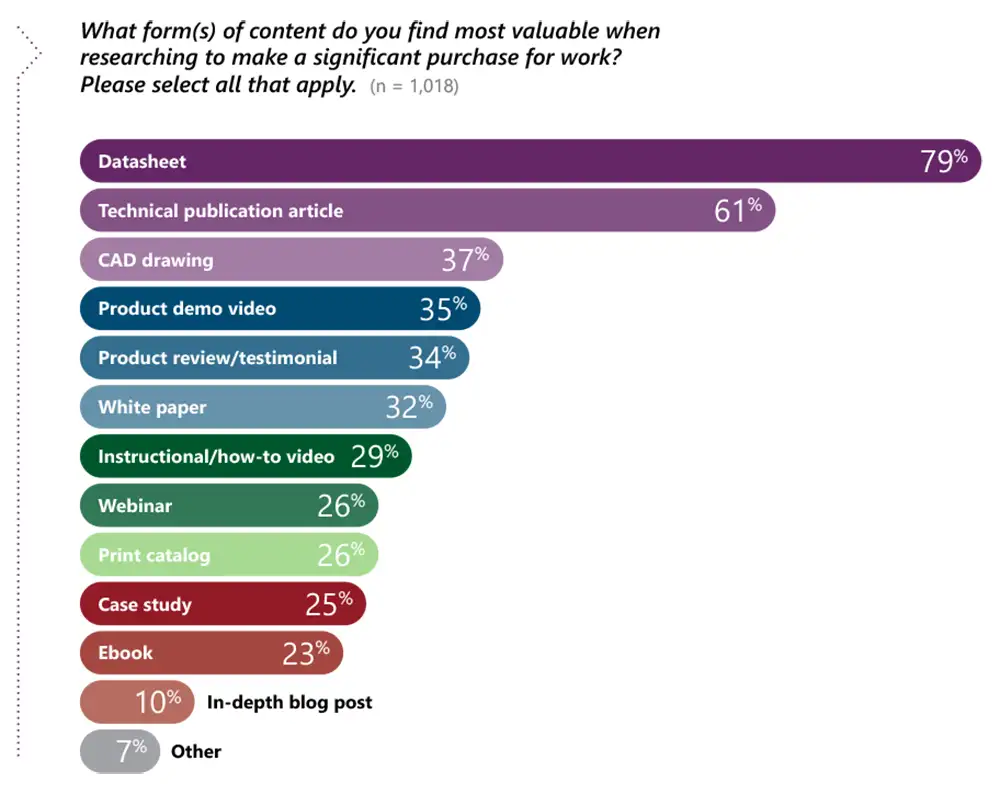
    The data backs this up, as shown in the chart below from the 2025 State of Marketing to Engineers report by TREW Marketing and GlobalSpec.

    Manufacturing website content engineers want

    Marketing Execution Needs Leadership, Not More Tools

    If your manufacturing website is underperforming, adding another platform or tool won’t fix the root problem.

    Most companies already have the tools. What they lack is strategic leadership.

    You may have HubSpot, Google Analytics, or a content management system. But without direction, those tools create activity, not results.

    Manufacturers often rely on internal teams or junior marketers to handle execution. These teams are hardworking but need senior-level guidance. Otherwise, it’s just busywork that doesn’t move the needle.

    That’s why many clients bring me in as a Fractional CMO.

    They don’t need a full-time executive. They need strategic oversight and accountability—20 focused hours a month can make a big difference.

    As a Fractional CMO, I help align marketing with sales, prioritize actions, and ensure your website works as a sales tool—not just a marketing asset.

    We lead with strategy. We fix gaps in messaging, site structure, and lead flow. Then we guide your team—or mine—through execution.

    It’s a practical way to get senior-level marketing without the full-time cost.

    And it works exceptionally well when paired with Manufacturing Marketing Strategy and Industrial Website Design services.

    Tools are helpful. But without leadership, they won’t turn your website into a lead generator.

    Key Questions to Ask Before You Act

    Before investing in a redesign or new tools, ask yourself a few strategic questions.

    These will help you pinpoint why your manufacturing website is underperforming and where to focus first.

    1. Is your site aligned with your sales process?
      Does it help move prospects from awareness to RFQ? Or does it leave them guessing?
    2. Are you speaking your customer’s language?
      Does your content address real-world problems engineers and buyers face? Or is it filled with marketing fluff?
    3. Can a technical buyer find what they need in two clicks or less?
      Engineers are busy. If they can’t find CAD files, specs, or certifications quickly, they’ll bounce.
    4. Is your value proposition clear and easy to find?
      Don’t make visitors work to understand what makes your solution better.
    5. Are you measuring performance beyond page views?
      Metrics like form submissions, time on page, and qualified leads tell the real story.

    You don’t need to answer all of these today. But thinking through them helps you avoid expensive redesign mistakes.

    We use these questions to guide every engagement—whether it’s a Manufacturing Marketing Strategy, Industrial Website Design, or Fractional CMO project.

    A strategic pause now saves a lot of frustration later.

    Start a Conversation with Tiecas

    If your manufacturing website is underperforming, don’t just patch the symptoms—let’s find the root cause.

    Whether you need a focused website strategy, sharper messaging, or ongoing leadership to guide your team, I can help.

    As a Marketing Engineer with decades of experience, I bring clarity, structure, and direction to your digital marketing—without the trial and error. Let’s turn your website into a true sales asset. Start a conversation with Tiecas today.

  • Industrial Website Redesign—Reengineering Your Site Into a Sales-Driven Asset

    Industrial Website Redesign—Reengineering Your Site Into a Sales-Driven Asset

    Are you considering an industrial website redesign? This blog will help you better plan for this challenging undertaking. If your industrial website still looks, feels, or functions like a digital brochure, it’s not just outdated—it’s underperforming.

    As you probably already know, the industrial buying journey has changed over the last few years. Your website needs to do more than display product specs and a contact form. It must engage time-starved technical professionals and move them confidently toward a sales conversation.

    According to the 2025 State of Marketing to Engineers report by TREW Marketing and GlobalSpec, 73% of technical buyers turn to vendor websites for information on a regular basis, making it the #1 source of information during the buying process. That means your website isn’t just a touchpoint—it’s your front-line sales tool.

    This post isn’t a DIY tutorial. It’s a practical guide for understanding the challenges and opportunities behind industrial website redesigns that deliver results. If your goal is to turn your website into a productive sales asset that aligns with how industrial buyers research, evaluate, and select vendors, you’re in the right place.

    Why an Industrial Website Redesign is Different (And Harder Than You Think)

    Redesigning a website for a manufacturing or industrial company isn’t the same as revamping a B2B tech site or a consumer-facing brand. Getting it right is more complex, technical, and frankly, critical.

    Here’s why:

    • Your audience is highly skeptical. Engineers and technical professionals are trained to question vendor claims and demand proof. If your site doesn’t clearly demonstrate expertise and credibility, they’ll move on without a second thought.
    • The buying process is long, non-linear, and involves multiple stakeholders. Unlike impulse-driven purchases, industrial buyers often need to validate product specs, compliance requirements, and long-term reliability before even initiating contact.
    • Legacy websites often have deep structural issues. Years of band-aid fixes, outdated platforms, and disorganized content make it difficult to update or build on top of what’s already there.
    • The product offering is complex. From SKUs and configuration options to application-specific solutions and certifications, industrial websites must present detailed technical information clearly and easily accessible.
    • Your web visitors aren’t “just browsing.” They’re often looking for solutions to their challenges. You’ve lost a sales opportunity if your website doesn’t help them do that quickly and confidently.

    That kind of trust-building and lead enablement doesn’t come from a simple visual refresh—it requires a strategic, deeply considered reengineering of your entire web presence.

    A generic industrial website redesign approach won’t address these challenges. Without a deep understanding of the industrial sales process and the technical mindset of your audience, even a well-designed site can miss the mark.

    From Brochureware to Sales Enablement: What Your Industrial Website Must Do Today

    It’s no longer enough for your website to be a digital brochure listing products, specs, and a phone number. That model assumes visitors already trust you and just need a place to validate what they’ve heard from a salesperson. But in reality, today’s industrial buyers expect your website to guide them through much of their buying journey, on their own terms.

    To become a true sales-enabling tool, your redesigned industrial website must fulfill three strategic roles:

    1. Educate with Authority

    Industrial buyers are problem solvers. They come to your site looking for insights, not fluff. This means offering clear, technically sound answers to real-world questions:

    • Detailed product data sheets, CAD drawings, and BIM files
    • Application notes, how-to guides, and case studies
    • Industry certifications and compliance information

    It’s not about dumping technical data—it’s about organizing it intuitively so that buyers can find what they need without friction.

    2. Engage Specific Personas

    Engineers want technical details. Plant managers need reliability assurances. Procurement wants fast access to warranties, lead times, and pricing. If your website speaks to everyone the same way, you’re talking to no one effectively. A well-reengineered website guides each visitor type through a tailored experience based on their role and objectives.

    You don’t need complex personalization software to get started. What matters more is understanding your different buyer personas and organizing your content so visitors can easily find what’s relevant to their role and stage in the buying process.

    3. Enable Sales Conversations

    Good industrial website design doesn’t just attract attention—it encourages action. That means more than having a “Contact Us” page. Think:

    • Product selectors or configurators
    • Application-based navigation to help visitors self-identify their use case
    • Smart CTAs tied to valuable content offers (e.g., “Download the spec sheet,” “white paper,” or “Talk to an engineer”)
    • Request for quote (RFQ) should be easy to fill out and ask for basic information only to get the ball rolling, not a detailed quote

    The goal isn’t to close the deal on the website—it’s to qualify the lead, start the conversation, and support your sales team with context and insights.

    Trust First, Then Leads: Rebuilding Credibility Online

    If you want engineers and industrial buyers to take action on your website, you need to earn their trust first. That’s not easy; they’re used to filtering out marketing hype and zeroing in on what matters: facts, evidence, and proof of performance.

    Your website’s content, structure, and design must reflect this reality.

    1. Trust Is Built Through Clarity and Competence

    Forget flashy effects or vague benefit statements. Technical professionals are looking for clear, logical navigation, relevant technical content, and signs that you know what you’re talking about. If your website makes them work too hard to find specifications, documentation, or contact information, you’ve lost them.

    2. Visual Design Matters—But for Different Reasons

    Engineers may not care about aesthetics like a consumer might, but that doesn’t mean design doesn’t matter. Clean layouts, well-organized menus, readable fonts, and mobile-friendly functionality all communicate competence and professionalism. Sloppy or dated design can create doubt, even if your products are rock-solid.

    3. Proof Beats Promises

    Trust isn’t just built on what you say—it’s reinforced by validation. Here are a few elements that help:

    • Industry certifications (e.g., ISO, UL, CE)
    • Case studies with real performance data
    • Testimonials from credible customers (when NDAs allow)
    • Project photos, application stories, or installation guides

    These aren’t “nice-to-haves”—they’re trust enablers. Without them, your claims sound like marketing fluff.

    In short, your industrial website must look and feel like the digital equivalent of a trusted sales engineer—helpful, knowledgeable, and quietly persuasive. That’s what builds confidence. That’s what opens the door to leads.

    Strategic Reengineering—Not Just Cosmetic Redesign

    Many industrial website redesign projects fail to deliver ROI because they focus on surface-level improvements—new colors, a modern template, a stock hero image, or two. But that’s not going to cut it with industrial buyers because they care less about design trends. They care about whether your website helps them solve problems, find what they need quickly, and feel confident in choosing you as a supplier or partner.

    That’s why I use the term reengineering instead of redesign. It reflects the depth of thinking and planning required to transform your site into a true sales asset.

    Here’s what that looks like in practice:

    1. Start with a Roadmap

    A successful industrial website redesign starts long before design mockups. It begins with:

    • Stakeholder interviews (Sales, Customer Service, Product Management)
    • Buyer persona development
    • Site audits (SEO, UX, content inventory, analytics review)
    • Competitive and peer site analysis

    This groundwork turns guesswork into a strategic plan tailored to your business.

    2. Map Content to the Industrial Buying Journey

    Engineers and technical buyers don’t make quick decisions. Your site must support every stage of their buying journey—from early research to evaluation to vendor selection. That means content shouldn’t just promote your company—it should guide, inform, and help them make an informed decision.

    Read my post, “Mapping Your Manufacturing Marketing Strategy to the Industrial Buyer’s Journey.”

    3. Align With the Sales Process

    Your website shouldn’t operate in a vacuum. It must support how your team sells, whether through reps, distributors, integrators, or direct channels. Key alignment points include:

    • Clear paths to request a quote, sample, or demo
    • Smart lead routing to the right person or team
    • CRM integration for seamless follow-up and attribution

    4. Choose the Right Platform—Not Just the Popular One

    Not every CMS is ideal for industrial websites. Your platform must handle large product catalogs, secure file downloads, multilingual support (if applicable), and integrations with tools like ERP, CRM, and marketing automation. WordPress can do all that—with the right development partner—but so can other platforms if chosen strategically.

    The takeaway? You’re not just building a prettier manufacturing website—you’re building a scalable, purpose-built tool for digital lead generation and sales enablement.

    Why You Shouldn’t Go It Alone

    Most industrial companies wouldn’t hesitate to call in an outside expert to optimize a complex production line or troubleshoot a controls issue. Yet when it comes to a website redesign—a project that directly impacts lead generation and sales—many try to handle it internally or hand it off to a generalist agency.

    That almost always leads to one of two outcomes:

    1. A visually updated site that fails to meet the needs of technical buyers, or
    2. A lengthy, frustrating process with missed deadlines and misaligned expectations.

    Here’s the reality: industrial website redesigns are too important, too complex, and too strategic to be left to trial and error.

    This isn’t about learning as you go. It’s about working with someone who understands your industry, sales cycle, and customers’ mindset from day one.

    You need a partner who:

    • Understands how engineers and technical buyers think and search
    • Knows how to translate complex product information into effective digital content
    • Builds websites that align with your sales process, not just your brand colors
    • Can streamline collaboration across your internal teams—sales, marketing, product, and leadership

    That’s precisely what we do at Tiecas. With more than 35 years of experience in industrial marketing and a deep understanding of how technical buyers engage online, we bring strategic clarity and execution to your website project.

    Your redesigned site should be a revenue-generating tool—not just a digital placeholder. Let’s make sure it’s built to perform.

    Ready to Reengineer Your Website Into a Sales Asset? Let’s Talk.

    Your industrial website redesign shouldn’t be an afterthought or another glorified online brochure. It should be engineered with purpose, built to win trust, and designed to support your sales team from the first click to the qualified lead.

    If your current site isn’t pulling its weight, let’s change that.

    At Tiecas, we specialize in industrial website redesigns that align with how engineers and technical professionals research and buy. We don’t just make websites look better—we make them work better for your business.

    Schedule a discovery call, and let’s talk about how we can reengineer your website into the high-performing sales tool it’s meant to be. Contact us today to get started.

  • What an Industrial Marketing Agency Can Do for Manufacturers: Strategy, Content, and Results

    What an Industrial Marketing Agency Can Do for Manufacturers: Strategy, Content, and Results

    Searching for an industrial marketing agency isn’t just a matter of semantics. The needs of manufacturers are vastly different from those of other industries, requiring a specialized approach that truly understands their challenges.

    Unlike generalist marketing firms, industrial marketing agencies are uniquely equipped to address the complexities of technical products, long sales cycles, and the nuanced buying behaviors of engineers and procurement professionals.

    In this blog, I’ll explore how an industrial marketing agency like Tiecas can provide a unique blend of strategic insights and executional expertise to help manufacturers thrive in today’s competitive markets.

    Whether you’re considering an industrial marketing agency, a Fractional CMO, or a hybrid solution, I’ll guide you through the options, explain the value of customer-centric content, and show why aligning marketing with your business goals is critical for success.

    Choosing Between an Industrial Marketing Agency for Manufacturing and a Fractional CMO: What’s Right for You?

    Deciding between hiring an industrial marketing agency for manufacturing and engaging a Fractional CMO often depends on your organization’s size, structure, and immediate needs. Both options offer distinct benefits, but understanding their roles and how they align with your business goals is essential to making the right choice.

    A marketing agency for manufacturing brings a team of specialized professionals who can handle everything from strategy development to content creation, SEO, lead generation, and more. This is particularly valuable for manufacturers looking to execute marketing campaigns efficiently without investing in full-time staff for every specialized role.

    Agencies like Tiecas, which exclusively serve the industrial sector, offer the advantage of a deep understanding of technical products, buyer personas, and the long sales cycles typical of the industry. We are not learning at your expense; we bring proven methodologies and sector-specific expertise to the table.

    On the other hand, a Fractional CMO offers high-level strategic oversight and leadership. This role is ideal for manufacturers needing an experienced marketing executive but not ready to commit to the cost of a full-time CMO.

    A Fractional CMO can work closely with your internal teams, bridging the gap between strategy and execution while ensuring alignment with broader business objectives. They also help in breaking down silos between sales and marketing, establishing KPIs, and refining strategies based on real-time data and market conditions.

    Choosing the right partner ultimately comes down to understanding your specific goals. Do you need a focused execution of marketing campaigns? Or do you require an overarching strategy to align marketing efforts with your business objectives? In either case, working with professionals who understand the complexities of industrial marketing is the key to success.

    What if You Could Get the Best of Both Worlds – Industrial Marketing Strategy and Execution?

    By partnering with a hybrid solution, like Tiecas, manufacturers can access the strategic leadership of a Fractional CMO while leveraging the executional power of a specialized industrial marketing agency. This approach ensures that every tactic—from website design to content marketing—is rooted in a well-defined strategy and executed to deliver measurable results.

    Developing a successful industrial marketing plan means aligning strategic thinking with precise execution. Without a clear roadmap, marketing efforts can become scattered and ineffective. At the same time, even the best strategy will fail to deliver results without consistent follow-through.

    For manufacturers, execution involves creating high-quality, customer-centric content, optimizing digital channels for lead generation, and leveraging data to refine marketing initiatives. It requires an experienced industrial marketer who understands the unique needs of technical buyers and can translate complex product information into compelling marketing campaigns.

    You don’t have to choose between strategy and execution. Our approach combines the high-level thinking of a Fractional CMO with the hands-on expertise of an industrial marketing specialist. Whether you need a full-scale industrial content marketing campaign or a focused effort to refine your lead generation strategy, Tiecas brings both strategic guidance and tactical execution to the table.

    Always start with a strategic roadmap and ensure every marketing effort drives measurable ROI.

    Consistently Creating Customer-Centric Industrial Content is a Challenge For Manufacturing Content Marketers

    Creating content that resonates with engineers and technical professionals is one of the most significant challenges manufacturers face. It’s not enough to describe product features or benefits—industrial buyers demand detailed, accurate information that directly addresses their work-related challenges.

    According to the Content Marketing Institute, “Manufacturing marketers struggle with creating content for the buyer’s journey, aligning content efforts across sales and marketing, and communicating internally among teams/silos.” (Source:2023 Insights for Manufacturing Content Marketing).

    While these obstacles are common, they’re not insurmountable. Customer-centric content begins with understanding your audience. What questions are engineers asking during their research? What problems are they trying to solve? The answers to these questions should form the foundation of your content strategy.

    At Tiecas, we emphasize creating industrial content that combines technical accuracy and clear messaging. This approach builds trust and encourages meaningful engagement with your target audience. For example, a blog post explaining how your products solve a specific problem can be far more effective than a generic product description.

    That said, consistency is key. Engineers and industrial buyers rely on reliable, accessible content at every stage of the buyer’s journey. From awareness to decision-making, your content must guide them seamlessly through the process.

    While tools like generative AI can assist with brainstorming and outline development, you cannot rely on 100% AI-generated content to engage technical audiences. This is where human expertise becomes essential. By blending AI’s efficiency with human insight, manufacturers can produce content that informs, engages, and converts. See my blog, Industrial Content Creation for Scalable Manufacturing Content Marketing Needs GenAI + Human Expertise.

    An Industrial Website Redesign Should be More Than a ‘Pretty’ New Skin

    For many manufacturers, the idea of a website redesign often focuses on aesthetics—modernizing the look and feel of the site. While visual appeal is essential, an industrial website redesign must go far beyond surface-level changes. It’s not just about creating a “pretty” new skin; it’s about developing a tool that drives measurable business results.

    The foundation of any successful industrial website is content. Product datasheets and detailed specifications are essential for design engineers, but your website content needs to go beyond that.

    Engineers and technical professionals seek specific, detailed information that helps them make informed decisions and address their pain points. Without this, even the most visually stunning website will fail to engage users or generate leads.

    You’ll need to pair your website content with a robust inbound marketing approach to convert visitors into leads. Let’s explore how industrial content marketing can set the stage for effective lead generation.

    Inbound Lead Generation With Industrial Content Marketing

    Inbound lead generation has become a cornerstone of modern industrial marketing. Why? Because today’s industrial buyers prefer to self-educate, conducting extensive research online before ever engaging with a sales representative. This shift means that your content must do the heavy lifting—informing, engaging, and building trust with your audience long before they’re ready to make contact.

    “Inbound leads, on average, cost 61% less than outbound leads.” (Source: Invesp).

    At its core, industrial content marketing is about creating valuable, relevant, and consistent content that addresses the specific challenges of your target audience. This might include technical whitepapers, case studies, instructional videos, or blog posts that provide actionable insights. The goal is to position your company as a trusted resource, earning the attention of engineers and decision-makers who are actively seeking solutions.

    But, effective inbound lead generation goes beyond content creation. To truly set the stage for your sales team, your content must be strategically distributed and optimized for search engines. This ensures that potential buyers can find the right information at the right time, whether they’re searching for answers to technical questions or comparing product specifications.

    Email marketing also plays a pivotal role in nurturing leads through long and complex sales cycles. You can maintain engagement, build relationships, and guide prospects toward a purchasing decision by delivering targeted content directly to their inboxes.

    Inbound content marketing doesn’t just generate leads—it builds stronger relationships by addressing work-related challenges rather than pushing sales pitches. This approach allows your sales team to have more productive conversations with well-informed prospects who are already familiar with your value proposition.

    In the next section, we’ll discuss how tracking and refining your marketing strategies can ensure that your lead-generation efforts remain aligned with your business goals.

    The Importance of Regularly Tracking and Refining Strategies

    No industrial marketing strategy is set in stone. Regularly tracking and refining your efforts are essential to staying aligned with your business goals and adapting to changing market conditions. A well-planned marketing strategy must be dynamic, driven by data, and continuously optimized to deliver measurable results.

    Establishing realistic KPIs is a crucial first step. Instead of focusing solely on top-of-funnel metrics like website traffic and pageviews, prioritize goals tied to sales and business objectives, such as Marketing Qualified Leads (MQLs) vs. Sales Qualified Leads (SQLs) and conversion rates.

    Tracking these metrics helps assess how your content and campaigns influence the buyer’s journey—from generating the right kind of leads to nurturing them effectively and driving conversions.

    Tracking and refining strategies aren’t about chasing vanity metrics but about driving tangible business outcomes. With a clear focus on data and continuous improvement, manufacturers can achieve sustained success in today’s competitive markets.

    At Tiecas, we understand manufacturers’ unique challenges in marketing their technical products and services. With over 35 years of experience and a unique combination of technical knowledge and industrial marketing expertise, we bridge the gap between complex technical concepts and effective marketing strategies.

    As a Marketing Engineer, I bring a rare blend of technical and business acumen to every project, ensuring your marketing resonates with the engineers and decision-makers who matter most. Let’s start with a conversation. Together, we can develop a strategic roadmap tailored to your business goals, ensuring that every marketing initiative delivers measurable ROI. Experience the difference an industrial marketing agency led by a Marketing Engineer can make in aligning your marketing and sales efforts for sustained success.

  • AI for Industrial Website Design: Revolutionizing User Experience and Lead Generation in Manufacturing

    AI for Industrial Website Design: Revolutionizing User Experience and Lead Generation in Manufacturing

    AI for industrial website design is garnering attention in the manufacturing sector. While it’s a relatively new area, it certainly merits exploration. As a seasoned expert in industrial website design for manufacturers, I’ve found that AI is an invaluable tool that enhances our capabilities. Yet, it does not replace the nuanced understanding and expertise that experienced professionals bring to the table.

    In my experience, a judicious blend of AI and human insight yields the most effective results. For a deeper dive into how this integration can elevate industrial content creation, refer to my previous post, ‘Industrial Content Creation for Scalable Manufacturing Content Marketing Needs GenAI + Human Expertise.’ I’ll explain in more detail later in this blog about the relationship and the importance of content with industrial website design.

    With this foundation, let’s explore how AI can complement human skills to develop more impactful industrial websites.

    The Role of AI in Industrial Website Design

    AI enhances efficiency and personalization in industrial web design, optimizing user experience and engagement for technical audiences. How?

    By analyzing vast amounts of data, AI can tailor content and layout based on individual user behavior, ensuring that engineers and technical buyers find exactly what they need with minimal effort. AI-driven design tools can also automate routine tasks, allowing you to focus on strategic initiatives that drive growth. Finally, AI’s predictive capabilities enable continuous improvement by identifying and implementing subtle changes that boost site performance over time.

    How to Use AI for Industrial Website Design in Planning the Foundation

    In industrial website design, the initial planning and strategizing phase is not merely beneficial—it’s crucial. Despite the excitement that comes with the creative aspects of web design, jumping in without a solid strategy can lead to disappointing results.

    Planning is especially critical in industrial markets, where the complexity of products and the technical depth required by engineers and industrial buyers demand a thorough understanding before any web development begins.

    Time and again, I’ve seen DIY enthusiasts and amateurs skip this crucial step, eager to get to the visual elements and interactive features. However, these projects often miss the mark without a well-thought-out plan, failing to address their target audience’s specific needs and pain points.

    AI tools offer significant advantages in this early stage by providing data-driven insights and enabling precision in targeting and customization. Yet, while AI can suggest optimizations and predict trends, it cannot replace the human expertise needed to interpret complex industrial concepts and integrate them into a cohesive web strategy.

    Thus, combining AI’s analytical capabilities with professional experience ensures that the foundational strategy is robust and finely tuned to the unique demands of the industrial sector.

    You need a strategic roadmap to ensure the success of an industrial website design project.

    Leveraging AI for Advanced Keyword Research and Competitive Analysis

    You’ve probably heard the old saying, “Build it, and they’ll come.” Well, those days are long gone—today’s organic SEO is more like they’ll come only if you’ve anticipated their search intent.

    Traditional keyword tools often fall short in the specialized niches of the industrial sector. They’ll give you the basics on ‘Pressure Relief Valves,’ but draw a blank on “What are two key functions of pressure relief valves in chemical processing plants?” That’s where AI steps in.

    AI-powered tools are transforming keyword research by delving deep into industry-specific lingo and uncovering those long-tail keywords that traditional tools might miss. Imagine a tool that doesn’t just scratch the surface of search volume and competition data but dives deeper into understanding context and user intent—essential in a specialized field of industrial marketing.

    AI also excels in competitive analysis, identifying weaknesses in a competitor’s SEO strategy. For instance, while your competitors might dominate common terms, AI can help you discover gaps. Maybe no one is adequately addressing “thermal efficiency in pressure relief valves,” a search query filled with potential for your site to gain the top ranking.

    Let’s talk about Google’s experimental Search Generative Experience (SGE) and the buzz around Open AI’s prototype SearchGPT. These innovations could redefine search dynamics, especially for niche markets. AI doesn’t just use keywords; it predicts and adapts to trends, potentially putting your site ahead of even Google’s own curve.

    So, while the days of ‘build it, and they’ll come’ may be over, with AI, it’s more about ‘build it smart, and they’ll flock.’

    AI-Enhanced Messaging and Value Propositions in Industrial Website Design

    AI for Industrial website design for manufacturers must differentiate your company when there’s global competition. It must go beyond the standard fare of product specifications and datasheets. For instance, while product specs are crucial, those alone won’t set you apart.

    It’s about crafting messaging and value propositions that resonate deeply with engineers and industrial buyers. These professionals navigate long and complex buying journeys, seeking answers to specific, challenging questions—does your website provide these answers, or does it merely serve as a digital brochure?

    A truly effective industrial website acts as a consultative salesperson, not just a product catalog. It anticipates and addresses the real-world challenges your potential customers face. You need to clearly articulate how your solutions solve actual problems, not just fulfill a specifications list. This approach ensures that your website isn’t just seen; it engages and persuades your audience.

    To enhance your messaging and ensure it hits the mark, leveraging AI to develop your website’s content can be incredibly beneficial. AI tools help tailor your value propositions based on the data-driven understanding of user behaviors and preferences specific to your industry. This technology supports creating content that draws visitors and converts them into leads by speaking directly to their needs.

    Remember what I said before, don’t rely 100% on AI to write your content. Strike a balance between AI tools and human skills.

    For a closer look at how these strategies are implemented and the results we delivered, consider our case study on redesigning an industrial website for a manufacturer, which showcases the tangible benefits of well-crafted value propositions and strategic content placement. Read our case study here.

    You may also want to learn more about our services in Industrial Content Creation and Industrial Content Marketing. These services are tailored to develop messaging that differentiates and resonates, ensuring your website is more than just informative—it’s influential.

    This approach not only aligns with the technical and detailed nature of your audience’s needs, but also positions your brand as the go-to solution provider in a crowded market.

    As we embrace the cutting-edge capabilities of AI for industrial website design, it’s essential to recognize and prepare for the challenges accompanying its adoption. Integrating AI technology requires significant technical expertise, which can be a hurdle for some small to mid-size manufacturers with limited in-house resources.

    The complexity of AI systems requires understanding their mechanisms and how to effectively implement them to enhance user experience without detracting from the human elements crucial in B2B relationships.

    One of the primary challenges is maintaining a balance between automation and personal interaction. While AI can streamline processes, predict user behavior, and personalize interactions on a scale that humans alone cannot achieve, it lacks the nuanced understanding that comes from years of experience in the industry.

    For example, AI might efficiently handle initial inquiries and data analysis, but the depth of customer engagement and complex problem-solving required in industrial sales still relies heavily on personal expertise.

    There is the risk of over-reliance on technology, where the distinct brand voice and the personal touch that define many successful industrial relationships might be lost. Integrating AI solutions that complement and enhance human efforts is crucial, rather than attempting to replace them. This means selecting tools that support your team’s skills and increase their productivity, rather than those that make your interactions with customers feel impersonal or generic.

    Remember, the GiGo principle applies here; the specificity of your prompts will determine the quality of AI’s output. It takes time and practice to get it right, so don’t rush the process—unless you’re a fan of learning the hard way!

    By acknowledging these challenges and approaching AI integration with a strategy that values both technology and human expertise, manufacturers can leverage AI to its fullest potential, enhancing their website’s design and functionality while preserving the essential human touch that drives business in the industrial sector.

    This balanced approach will improve efficiency and user engagement and solidify your position as an innovator in your field.

    Ready to Transform Your Industrial Website?

    Don’t start your next industrial website design project without the right expertise or a strategic blueprint. With over 35 years of hands-on experience, my unique background as a Mechanical Engineer with an MBA in Marketing equips me with an in-depth understanding of both engineering complexities and market dynamics. This rare combination enables my team at Tiecas, an industrial marketing agency, to deliver tailored solutions that meet and exceed industrial clients’ specific demands.

    Don’t settle for generic solutions that don’t grasp the nuances of your industry. Let’s discuss how we can apply the precision of engineering and the insight of marketing to develop a website that truly drives results and distinguishes you in the marketplace. Start a conversation with us today and see what a difference the right expertise makes.

  • Industrial Website Design: Beyond the Blueprint—Crafting Digital Experiences That Convert

    Industrial Website Design: Beyond the Blueprint—Crafting Digital Experiences That Convert

    An industrial website redesign is more than a facelift; it’s a strategic investment in your company’s digital presence. A first impression can make or break a potential customer’s decision to engage with your brand. (For more on the complexities of industrial website redesigns, see my article Industrial Website Redesign: Why It’s Not a DIY Project.

    Strategic Framework for Industrial Website Design

    But where do you begin? Start by asking yourself these critical questions, and be brutally honest:

    • Why are you redesigning your website? Is it just for a “fresh look,” or do you need to address deeper issues like outdated messaging, poor user experience, or a lack of lead generation?
    • Does your current website truly reflect your company’s core values and capabilities? Does it resonate with your target audience’s pain points and challenges?
    • Is your website a static brochure or a dynamic tool that educates, engages, and drives action?

    Tip: Involve your sales team early in the planning process. They have invaluable insights into customer needs and objections.

    A well-planned industrial website design goes beyond aesthetics. It’s a digital experience that converts visitors into leads and customers. By addressing these foundational questions, you can create a strategic framework that sets your website redesign up for success.

    Creating an Industrial Value Proposition that Converts: Understanding Your Target Audience

    Your industrial website’s value proposition is the core message that communicates how your products or services solve your customers’ specific problems and deliver tangible benefits. You need a deep understanding of your target audience to craft a truly resonant value proposition.

    Identifying Your Key User Personas

    Start by defining the different types of users who visit your website. In the industrial sector, these often include:

    • Engineers: Seeking technical data, performance specifications, and evidence of reliability.
    • Plant Managers: Focused on efficiency, productivity gains, and cost savings.
    • Operations Managers: Interested in streamlining processes, reducing downtime, and improving safety.
    • Safety Managers: Prioritizing compliance, risk mitigation, and employee well-being.
    • Purchasing Personnel: Evaluating ROI, total cost of ownership, and long-term value.

    Understanding Their Pain Points and Needs

    Once you know who your audience is, dive into their pain points and desires:

    • What are the most pressing work-related challenges they face?
    • What are their top priorities and goals?
    • What do they value most in a product or service provider?
    • How do they make purchasing decisions?

    By mapping these needs, you’ll uncover the unique value your company offers to each persona. This forms the basis of your website’s messaging and content strategy.

    Crafting a Value Proposition that Resonates

    A compelling value proposition is clear, concise, and customer-centric. It doesn’t just list features; it highlights the benefits your products or services provide.

    For example, instead of saying, “Our pumps have a high flow rate,” you could say, “Our high-performance pumps deliver the reliable flow rates needed to meet your demanding production targets.” To strengthen that statement, try to state specific numbers.

    By addressing your audience’s specific pain points and desires, you can create a value proposition that differentiates your company and drives conversions. Remember, a website that speaks directly to your audience’s needs is far more likely to turn visitors into customers.

    How to Validate Your Value Proposition

    1. Data: If you have case studies or customer testimonials that demonstrate quantifiable results, use those as evidence.
    2. Industry Benchmarks: Research industry averages for the type of improvement your product typically delivers.
    3. Consult with Experts: Talk to your engineers, sales team, or industry consultants for their insights on realistic outcomes.

    You build trust with your audience and set realistic expectations by being accurate and specific in your value proposition. This is crucial for long-term customer relationships.

    Translating Audience Insights into Actionable Website Design

    Understanding your audience isn’t just about fictional personas—it’s about translating that knowledge into actionable design decisions. Here’s how your audience insights directly shape your website:

    • Navigation: Structure your website with your key personas in mind. Engineers might need quick access to technical specifications, while plant managers and executives might prioritize case studies showcasing ROI. Make sure each group can easily find the information most relevant to them.
    • Copy: Tailor your messaging to resonate with each group. Use language that speaks to engineers’ technical expertise while emphasizing cost savings and efficiency for plant managers. Speak their language to build rapport and trust.
    • Calls to Action (CTA): Design CTAs that align with each persona’s goals. Offer engineers whitepapers or downloadable CAD files. Webinars are great for explaining complex concepts to a captive audience. Provide ROI calculators to help your audience make more informed decisions.
    • Overall Design: Create an intuitive and efficient user experience for everyone. This might mean using clear visuals and diagrams for engineers while highlighting testimonials and case studies for decision-makers.
    • Mobile Responsiveness: Prioritize mobile responsiveness in your design. Although most technical professionals use desktops for browsing, many are on the shop floor or out in the field. These people likely access your website from smartphones or tablets. Ensure your site adapts seamlessly to different screen sizes, providing a smooth user experience on any device.

    By aligning your website design with your audience’s unique needs and motivations, you’ll create a more engaging and effective online experience. This, in turn, will help you attract, engage, and convert more visitors into loyal customers. Is it worth all this effort? The short answer–YES!

    41% of technical buyers turn to supplier/vendor websites when looking for information about products and services. It is the number 1 source of information. (Source).

    Writing Industrial Website Copy that Converts

    Crafting compelling website copy for industrial companies is a specialized skill that goes beyond simply describing your products or services. It requires a deep understanding of your target audience, their pain points, and the language that resonates with them.

    Here’s why writing industrial website copy isn’t as simple as it seems:

    1. Technical Nuances: Industrial products and services often involve complex technical details. Your copy needs to be accurate, informative, and engaging without overwhelming the reader with jargon (Don’t dumb down the copy. Your audience is knowledgeable). This requires a writer with a technical background or the ability to grasp complex concepts quickly.
    2. Industry Knowledge: The industrial sector has its own unique language and culture. An experienced copywriter understands industry trends, regulations, and terminology, allowing him or her to create content that speaks directly to your target audience.
    3. Balancing Information and Persuasion: Industrial buyers are looking for information, but they also need to be persuaded that your company is the right choice. A skilled copywriter can strike the right balance between providing valuable information and showcasing your company’s unique value proposition.
    4. SEO Optimization: Your website copy needs to be optimized for search engines so potential customers can find you online. This requires an understanding of keyword research, on-page optimization, and other SEO best practices.

    Creating industrial website copy that converts requires a combination of technical knowledge, industry expertise, and marketing savvy. If you don’t have these skills in-house, consider partnering with a specialized industrial marketing agency like Tiecas.

    Just so you know, we use a judicious blend of Generative AI and human expertise. Our copy is never 100% AI-generated.

    Industrial Content Marketing and Industrial Website Design: An Inseparable Duo

    A redesigned industrial website alone won’t generate high-quality leads without a robust content marketing strategy. To achieve long-term results, you need to plan for ongoing industrial content marketing that establishes thought leadership, builds trust and converts website visitors into qualified leads.

    Developing a Content Strategy that Aligns with Business Goals

    Your content strategy should be more than a random collection of blog posts and white papers. A carefully crafted plan must align with your overall business objectives.

    This is where a Strategic Roadmap comes into play. A well-defined roadmap outlines your content goals, identifies the most effective channels for distribution, and establishes a timeline for execution. It ensures your content efforts are focused and aligned with your broader business objectives.

    Creating High-Quality Content that Educates and Engages

    While product specifications are essential in manufacturing marketing, your industrial content must go deeper and broader than that. Industrial buyers and engineers want to learn from experts and gain insights into industry trends. They often look to their suppliers to fill the gap as in-house resources dry up due to retirements and cutbacks.

    Create high-quality content that educates, informs, and engages your audience. This could include blog posts, articles, white papers, case studies, videos, webinars, and more.

    However, industrial content creation is only half the battle. You also need to market that content to effectively reach your target audience, which is where industrial content marketing expertise becomes crucial.

    Amplifying Your Reach and Impact With Industrial Content Marketing

    Industrial content marketing involves promoting your content through various channels, such as:

    • Search Engine Optimization (SEO): Optimizing your content to rank higher in search results and attract organic traffic.
    • Social Media: Sharing your content on relevant platforms to reach a wider audience and engage with potential customers. (Engineers and technical professionals tend to be passive participants in social media. Temper your expectations accordingly)
    • Email Marketing: Sending targeted emails to your subscribers to promote your latest content, nurture Marketing Qualified Leads (MQLs) into Sales Qualified Lads (SQLs), and ultimately drive conversions.
    • Paid Advertising: Using paid ads to reach a specific audience and drive traffic to your website. Works well for manufactured products without much customization and industrial consumables like desiccants and spare parts. It is not very effective in custom-engineered systems.

    By leveraging these channels, you can maximize the reach and impact of your content, generating more leads and driving business growth.

    The Synergy of Content and Design

    Your website design and content strategy should work together seamlessly. Your website’s design should make it easy for visitors to find and consume your content, and your content should be easy to read on the screen and mobile devices.

    Integrating content marketing and web design allows you to create a powerful online presence that drives business growth.

    Empowering Sales Through Strategic Website Tools

    For industrial companies, a website is more than just a digital brochure; it’s a dynamic tool that can empower your sales process. By incorporating specific features and functionalities, you can equip your website to attract, engage, and guide potential customers toward informed purchasing decisions.

    Beyond the Brochure—Digital Tools that Drive Sales:

    • Interactive Product Catalogs: Move beyond static PDFs and create interactive catalogs that allow users to explore product details, specifications, and applications in a more engaging way.
    • Product Configurators: Empower customers to customize product configurations based on their specific needs, providing instant visualizations and technical details.
    • Downloadable CAD Files: Cater to design engineers by offering downloadable CAD files. This streamlines their workflow, reduces errors, and accelerates the design process, ultimately leading to faster sales cycles. (For more on the impact of CAD files, see my blog post on “Using CAD and BIM Files in Manufacturing Content Marketing.”)
    • Part Number Builders: Enabling customers to build part numbers based on their specific requirements simplifies the ordering process, ensures accuracy and reduces the need for back-and-forth communication.
    • Cross-Reference Tools: Help customers find compatible replacements or alternatives for existing parts, expanding your potential sales opportunities.
    • Interactive Design Tools: Allow customers to explore various options and parameters, virtually testing how your products fit their specific applications and requirements. This empowers them to make informed decisions based on real-world scenarios.

    Integrating these sales-enabling tools into your website creates a more interactive and informative experience for potential customers. This empowers them to make informed decisions, shortens the sales cycle, and ultimately drives revenue growth. Remember, your website should be a valuable resource for your customers, not just a static display of your products and services.

    The Data-Driven Approach to Industrial Website Design for Measuring Success

    A well-designed industrial website isn’t a “set it and forget it” project. It’s a dynamic asset that requires continuous monitoring, analysis, and refinement to maximize its effectiveness. By tracking key metrics and leveraging data-driven insights, you can ensure your website continuously evolves to meet the changing needs of your audience and your business goals.

    The Challenge of Measuring Content Performance

    While the importance of tracking website performance is undeniable, many industrial companies struggle to make sense of the vast amounts of data available. As highlighted in the Manufacturing Content Marketing Insights for 2023 report published by the Content Marketing Institute, manufacturing marketers’ top challenge is “difficulty integrating/correlating data across multiple platforms (48%).”

    This challenge can lead to missed opportunities, wasted resources, and a lack of clarity on what’s truly working. That’s why it’s crucial to simplify the data and focus on the metrics that matter most.

    Key Metrics to Track Website Performance

    Here are some essential metrics to keep an eye on (Some of these are basic, and you probably already know them):

    • Website Traffic: The number of visitors your website receives.
    • Traffic Sources: Where your traffic comes from (organic search, social media, referrals, etc.).
    • Leads Generated: The number of inquiries or requests for quotes you receive through your website.
    • Conversion Rate: The percentage of website visitors who take a desired action (e.g., downloading a white paper or filling out a contact form).
    • Time on Page: How long visitors spend on each page of your website.
    • Bounce Rate: The percentage of visitors who leave your website after viewing only one page.

    Using Analytics to Gain Insights into User Behavior

    The beauty of a data-driven approach is that it allows you to improve your website continuously. By regularly reviewing your analytics, you can identify trends, test new ideas, and make adjustments to optimize your website’s performance.

    At Tiecas, we understand the challenges of interpreting complex website data. That’s why we offer a monthly “Site Analytics Report” that simplifies the key metrics and provides actionable insights.

    Our reports are easy to understand, even for those with little knowledge of Google Analytics (GA4). They include our expert comments to help you make data-driven decisions that improve your website’s performance and drive business growth.

    Key Takeaways:

    • Strategic Framework: A successful industrial website redesign starts with a well-defined strategic framework that aligns with your business goals.
    • Mobile Optimization: Prioritize mobile responsiveness to ensure a seamless user experience across devices.
    • Know Your Audience: Understanding your target audience’s needs, pain points, and motivations is crucial for crafting a website that resonates and converts.
    • Compelling Copywriting: Effective industrial website copy requires specialized skills, industry knowledge, and a focus on both information and persuasion.
    • Content Marketing: A robust content marketing strategy amplifies your website’s reach and impact, nurturing leads and driving business growth.
    • Sales-Enabling Tools: Incorporating interactive product catalogs, configurators, CAD files, and other tools empowers your customers and streamlines the sales process.
    • Data-Driven Improvement: Track key metrics (KPIs), leverage analytics, and continuously refine your website to maximize its effectiveness.

    Ready to Transform Your Industrial Website into a Lead-Generating Machine?

    At Tiecas, we specialize in industrial website design, content marketing, and content creation. We can help you create a website that showcases your expertise and attracts, engages, and converts your target audience.

    Contact us today for a free consultation and discuss how we can elevate your online presence. Let’s Talk.

  • Industrial Website Redesign: Why It’s Not a DIY Project

    Industrial Website Redesign: Why It’s Not a DIY Project

    In my experience with industrial website redesigns, I’ve seen too many manufacturers and industrial companies put a misguided focus on just the look of a website. While a fresh design matters, it’s only one piece of the puzzle.

    A truly effective industrial website is a lead-generation engine, and your site’s strategic makeover must address the aesthetics and inner workings that drive potential buyers toward meaningful action.

    Your industrial website must confidently convey your expertise, setting you apart from the competitors in meaningful ways. A well-designed website amplifies your unique value proposition to the right audience.

    An industrial website redesign is complex and has many potential pitfalls. Common mistakes include prioritizing aesthetics over functionality, lacking compelling content, or neglecting alignment between the website and your existing sales process.

    Messaging Matters for Effective Industrial Website Redesign

    Are you tired of your website sounding just like your competitors? Does your brand resonate with your target audience? These essential questions are not simply a marketing exercise. I feel it is so important that I recently published a post titled, How to Use Manufacturing Branding & Industrial Lead Generation as a Power Couple.

    Generic, buzzword-laden messaging won’t cut it for industrial websites. Prospective customers in your niche have seen it all before. As Jeffrey Zeldman (American entrepreneur, web designer, author, podcaster and speaker on web design) astutely put it, “Content precedes design. Design in the absence of content is not design, it’s decoration.”

    Clear, differentiated core messaging is the cornerstone of a successful industrial website redesign. Here’s the difference between weak and impactful messaging:

    Weak: XYZ Corporation – “We are a leading provider of high-quality industrial solutions.”

    Impactful: XYZ Corporation – “Precision CNC machining for aerospace components meeting AS9100D standards. On-time delivery guaranteed.”

    The second example immediately tells a potential buyer what you do and the primary industry you serve, giving a hint of your commitment to quality. To build this kind of messaging, you need to dig into the specifics of your ideal customer’s pain points and how you solve them better than anyone else.

    To learn more about using content to create differentiation, read my post How Manufacturers Can Use Content for Differentiation and Create a Competitive Edge.

    What Engineers and Buyers Seek (And How Your Industrial Website Can Deliver)

    Engineers and buyers who visit your industrial website are on a mission. They need solutions, not sales pitches. Your website must become a trusted resource to establish credibility before any sales contact occurs. This means prioritizing content that showcases your expertise and aids decision-making.

    Here’s what engineers and buyers typically look for when vetting potential suppliers:

    • In-Depth Technical Specifications: Detailed specs and data sheets provide the essential information engineers need to assess suitability. Easy-to-find downloads show you value their time.
    • Downloadable CAD files: Engineers often need to incorporate your components or products into their designs. Providing CAD files is a powerful “sales enabler” – according to a study by CADENAS PARTsolutions, a staggering 82% of CAD/BIM downloads convert into actual sales.
    • Case Studies: Real-world examples demonstrating your capabilities in their specific industry are much more persuasive than vague claims.
    • Whitepapers and Application Notes: These resources establish your thought leadership and position you as a problem-solver, not just a product vendor.
    • Clear Demonstrations of Quality Standards: Highlight your certifications (ISO, AS9100D, etc.) prominently.

    Remember, investing in robust content pays rich dividends. You’ll attract higher-quality leads and streamline the sales process because prospective buyers will come to you already well-informed.

    For further insights into the content preferences of engineers, see my post: “What Content Do Engineers Want When Visiting Websites?”

    Industrial Website Redesign Isn’t Just Skin-Deep

    A visually appealing industrial website is essential, but it can’t stand alone. Form follows function, especially when it comes to technical audiences. Strategic web design for the industrial sector must consider the following:

    • Intuitive Navigation: Make it effortless for visitors to find the necessary information.
    • Fast Loading Times: Engineers expect quick access to critical data.
    • Mobile Responsiveness: Your website must work flawlessly across all devices.
    • Strategic Calls to Action (CTAs): Guide visitors toward the next steps in their journey.

    Moreover, your industrial website redesign must align with your existing sales process instead of another same old “me too” industrial website.

    The Case for Professional Help with Industrial Website Redesign

    With the rise of DIY website builders, tackling an industrial website redesign in-house might seem tempting. However, there’s a reason why industrial website design prices can vary significantly.

    A $5,000 website might get you a basic online presence, but it’s unlikely to address the strategic complexities of creating a true lead-generation engine.

    Here’s what often gets overlooked when companies opt for a DIY approach:

    • Lack of Strategic Content Planning: Producing robust content that attracts qualified leads takes research, time, knowledge, and expertise.
    • Underestimating Technical Requirements: Industrial websites must meet specific SEO and user experience standards that generic website builders might not fully support.
    • Neglecting Sales Alignment: A website that doesn’t integrate with your sales processes creates friction, not potential customers.
    • Prioritizing Look Over Functionality: A visually appealing website that doesn’t convert visitors is a missed opportunity.

    Professional web design agencies specializing in the industrial sector understand these nuances. They invest time into developing your unique messaging, ensuring your technical content is optimized, and designing the website with your buyer’s journey in mind.

    While there will always be lower-cost website options, remember that your website is an investment, not just an expense. A strategically designed website generates qualified leads and delivers a strong return on investment (ROI).

    Your industrial website is a critical business asset. It has the potential to be far more than just a digital brochure. It must be the hub of your online presence and a powerful tool for attracting the right leads and streamlining your sales process.

    However, achieving this level of success requires strategic planning, focused content creation, and an understanding of the technical requirements unique to your industry. These skills and expertise are not readily available in small to one-person marketing teams which is typical in many manufacturing and industrial companies.

    If you’re ready to explore a professional redesign that will truly transform your website’s potential, I invite you to visit our industrial web design services page. You’ll find in-depth information on our process, case studies, and the results you can expect from a strategic partnership. By investing the time to understand our approach, you’ll be equipped to make an informed decision that aligns with your industrial website redesign goals.

  • Successful Industrial Website Redesigns: The Essential Elements and the Benefits of Regular Updates

    Successful Industrial Website Redesigns: The Essential Elements and the Benefits of Regular Updates

    Industrial website redesigns require careful planning and attention to many details. You are likely to be disappointed with the results if you or your developer don’t put in the time upfront before doing any designing and developing.

    See Why do so Many Industrial Website Redesigns Fail?

    An up-to-date and user-friendly industrial website is essential for success in today’s business world with global competition. That is not a hyperbole; see the direct quote from “2021 Pulse Of Engineering Survey” published by GlobalSpec.

    An up-to-date and user-friendly industrial website is essential for success in today’s business world with global competition. That is not a hyperbole; see the direct quote from “2021 Pulse Of Engineering Survey” published by GlobalSpec.

    “In terms of competition, 58 percent said that the competitive landscape is global and competes 24/7, while 47 percent said the number of competitors is growing.”

    While Industrial websites must be designed for aesthetics and functionality, I firmly believe in “form follows function.” That’s good to know, but how do you put it into practice? This post is all about that, so let’s get started!

    Planning the User Experience (UX) for industrial website redesigns

    One of the essential elements of industrial website redesigns is the user experience (UX). Thinking like visitors and anticipating their needs is crucial when designing a website. An intuitive navigation system is vital in creating an excellent user experience. Visitors to your site should quickly find what they are looking for without spending a lot of time searching around or being overwhelmed by the sheer volume of information.

    An intuitive navigation should minimize clicks and streamline the browsing experience. Plan the flow of information from the Home page to internal pages to help your site visitors find the information that is relevant to them with a minimal number of clicks. Then, guide them to specific internal pages where you provide additional content to help them make an informed decision.

    Intuitive navigation can make or break your UX. You have to think from your visitor’s perspective and not what you think is obvious.

    Unique Selling Proposition (USP)

    Your unique selling proposition (USP) and value proposition should be clear and concise

    That is not just marketing speak. A USP is where you tell your visitors why they should do business with you, not the competition. There can be some overlap between USP and your Value Proposition.

    Here’s a good way to understand the differences I found on Zoho Academy’s website.

    “While the USP situates a business in relation to its competitors, the value proposition focuses more on how customers’ lives will be improved by working with the business. In other words, while a USP describes for your target market how you’re different, a value proposition answers the question: Why should they care about that difference?”

    Your industrial website must quickly answer the who, what, and why questions using short, direct statements. It shouldn’t be a blatant sales pitch. Instead, it should motivate visitors to have meaningful conversations with your sales team because they see you as a good fit for their needs.

    Use webpage content to create true differentiation

    Many manufacturers struggle to create true differentiation when there’s parity in value propositions. They continue to use generic statements like “exceptional customer service” or “highest quality.” The competition can just as easily make the same statements. Validate your claims and provide proof of concept if you want serious consideration from site visitors.

    Content creation for website redevelopment is probably the biggest bottleneck. However, it cannot be an afterthought or retrofitted after completing the redesign. See Why Retrofitting Industrial Website Redesigns Usually Don’t Work.

    Jeffrey Zweldman on content and web design

    Your expertise should be front and center

    Bring your in-house Subject Matter Experts (SMEs) to the forefront to highlight your expertise. This is not something your competition can easily copy. Marketing can do the heavy lifting of content creation but must remain in the background. One engineer to another is a powerful concept that simply works!

    I speak from 35+ years of hands-on experience working with industrial clients but don’t just take my word for it. (Source: 2023 State of Marketing to Engineers published by TREW Marketing and GlobalSpec).

    one engineer to another

    Planning for search engine optimization (SEO) and conversions

    Search Engine Optimization (SE)

    A well-thought-out search engine optimization plan is a necessity. There are no tricks or magical formulas (Formulae if you want to be technically correct) to gain first-page rankings. It takes knowledge of white hat techniques, keeping up with Google’s algorithm updates, and the experience to do SEO right. Above all, it takes time to produce results, so don’t expect immediate results from organic SEO.

    Responsive web design is another important consideration. Google’s “mobile-first indexing” is an important signal for ranking. It is not enough to have a mobile-friendly site. It needs to be mobile-optimized.

    Another common problem is the lack of understanding between SEO and conversions. Just because someone found your site in search engines and visited your website doesn’t mean they are ready to talk to your sales team. There is a difference between discovery optimization (SEO) and conversion optimization (CRO). They are related but not the same.

    Webpage content must address visitors’ concerns and logically move them forward in their buying journey. That’s when the conversion happens.

    See SEO Must Complement Conversion Optimization for an Effective Industrial Marketing Strategy.

    Regularly updating and keeping the website secured

    Website updates and maintenance

    This step happens after the redesigned site has launched. Neglect it at your own peril. If your industrial website is/was built using WordPress, plugins must be regularly updated, or they may fail. That’s just a fact of life with WordPress. Don’t take the lazy way out by using automatic updates. Incompatibilities between new versions and bugs are pretty common. Do read up on the plugins used on your site, and it is sometimes safer to wait a week or two for the dust to settle whenever a major update is released.

    Securing your website against hacks is another issue you must be aware of, especially if you have an online store. Cleaning up after a hack is a long-drawn process that can be expensive. Another thing to check is your backend integrations with CRM and ERP systems. I’ve seen API connections fail from time to time. Check them regularly to make sure nothing is broken.

    An industrial website redesign can be complex, but it is well worth the effort. You can create an effective website that drives conversions and achieves business goals by leveraging user experience (UX), navigation, segmentation, search engine optimization, and content tailored to your target audience’s needs.

    Additionally, regular updates and putting security measures in place will keep your site functioning without glitches and lower the risk of hacks.

    Industrial website redesigns will help increase brand awareness and customer engagement if done correctly. With this in mind, it is clear why investing time into creating a successful website redesign strategy should be at the top of every manufacturer’s list when looking to expand their online presence.

  • What Content do Engineers Want When Visiting Websites?

    What Content do Engineers Want When Visiting Websites?

    What content do engineers want is probably a question you’ve asked yourself many times. An industrial website is the hub for manufacturing content marketing. It is by far the most important digital asset you own. I don’t need to repeat all the reasons for having a robust website. Yet, I’ve seen content take a backseat instead of driving an industrial website redesign.

    Where do engineers go to find information for making a purchase decision?

    Let’s back up a bit to see the sources engineers use to find content when making a buying decision. According to the 2022 State of Marketing to Engineers research report published by GlobalSpec and TREW Marketing, 69% of engineers go right to the source—supplier/vendor websites when researching a product or service for a business purchase.

    sources of information for engineeers

    Now that we know the number one source of information, let’s ask ourselves, what content do engineers want to see and consume? Here’s another chart from the same research study I’ve cited above.

    Content engineers want

    Surprised by #1? After all, datasheets are considered product-centric and not really customer-centric content.

    If you manufacture industrial components, your product specs must meet the engineer’s design specifications. Otherwise, the conversation doesn’t even start.

    Now, you may be saying to yourself, “We have plenty of those.” Then let me ask you, “When was the last time you downloaded and read one of your datasheets?”

    I’m not trying to be a smart-a** here. I’ve seen outdated datasheets that do not match current product specifications, added options, and features. You may lose a sales opportunity or, at the very least, damage your credibility when this happens. Do a complete audit of all your current product literature, update old ones, and create new materials if necessary.

    Challenges in manufacturing content marketing

    Okay, so all you need to do is create more datasheets, easy peasy lemon squeezy, right? Think again!

    As a manufacturer or a distributor, your primary audience is engineers, MRO, and other industrial professionals. Creating technically accurate content that this audience will find relevant and moving them forward logically in their buying journey is a big challenge. I’ve read several research studies documenting this problem which has persisted for a few years.

    It takes knowledge of the technical topic and preparing intelligent questions to ask of in-house Subject Matter Experts (SMEs) to extract the key talking points. Then, add good copywriting, editing, and SEO skills on top of that. You must go back to the SME for his/her approval before publishing any content. Rehashing product features with clever wordsmithing won’t cut it.

    “Respondents said their top three content marketing challenges are creating valuable content instead of sales-oriented content (51%), overcoming the traditional marketing and sales mindset (51%), and accessing subject matter experts to create content (50%).”

    That’s a direct quote from the 2022 Manufacturing Content Marketing report published by the Content Marketing Institute.

    It isn’t as simple as outsourcing technical content creation either. According to the same report, 59% of respondents said their organization outsources at least one content marketing activity. Their top challenge is finding partners with adequate topical expertise (60%).

    content creation challenges

    Industrial blogging—benefits and difficulties

    Industrial blogging is an essential and integral part of manufacturing content marketing. If you’ve been blogging for a while, you already know blogging’s positive impact on organic SEO. That’s not all. Consistently publishing posts your audience wants to read will help win the engineer’s mindshare and build trust.

    However, industrial blogging is an underutilized content strategy and has its own challenges. Read my earlier post, Using Manufacturing Blogs for Lead Generation, to learn more.

    Manufacturing marketing budgets

    The average marketing spend increased from 6.4% to 9.5% of company revenue across almost all industries in 2022. (Source: Gartner).

    marketing budgets - Gartner

    However, manufacturers tend to lag as compared to other industries. According to the latest CMO Survey, the marketing budget for manufacturers averages 4.52% of revenue and 7.65% of the total company budget as compared to 8.6% of firm revenue and 12.1% of the total budget across industries.

    Marketing to engineers is not easy

    I’ve worked with many in-house marketers at manufacturing companies who know marketing but struggle with engaging with engineers and technical professionals. It is not just about creating content; they need help understanding how this audience makes buying decisions.

    In addition, they have difficulties formulating effective strategies for marketing to a committee of stakeholders, some of whom may never visit their websites, and the sales cycle is usually long. They want me to coach and consult with them to overcome some of these hurdles of marketing to engineers.

    My presentation topic at the 2019 Content Marketing World Conference was “The Unique Challenges of Marketing to Engineers and Industrial Buyers.” You can view the video recording here.

    Don’t be a victim of the “shiny new toy” syndrome

    As an industrial marketer, adding a new technology stack that will make you and your team more efficient and add cool new features to your website is tempting. Nothing wrong with that goal per se. However, you probably won’t get an increase in the marketing budget if technology is the primary focus at the next planning meeting.

    I recently read an interesting article by Robert Rose, the founder and chief strategy officer of The Content Advisory, the education and consulting group for The Content Marketing Institute. He explains why technology alone is not the answer, and the initial subscription cost may just be the tip of the iceberg. Read his post, “Your 2023 Planning Shouldn’t Be All About That Tech,” for valuable insights.

    Content should drive your website redesign plan and the strategy for manufacturing content marketing. Don’t try to retrofit content to a design or a strategy as an afterthought.